

Quinn needs to get his sums right when it comes to calculating cuts

Date Published: {J}
Across the world, there has hardly been a tougher time to be in government. “The men in the grey suits” have been called in to try to fix the economies of any number of countries – in Greece, because they lied and have an almost entirely black economy and in Ireland, because the entire economy of the early 2000s was built on a property bubble induced by Bertie Ahern, Brian Cowen and Charlie McCreevy.
The bosses of the European Central Bank were quite happy to keep “turfing out” the money to Irish borrowers for five-series Beemers and apartments at one per cent and then came looking for payback at four per cent with the international bailiffs from the International Monetary Fund trudging along behind them.
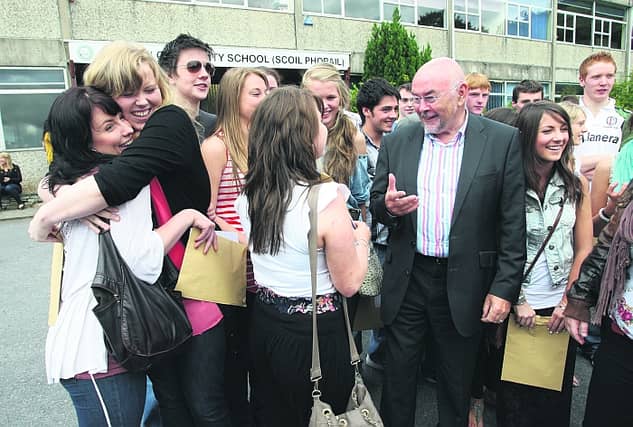
It’s against this background that we have to look at the present Irish economic situation – and it will have been disconcerting in the past week to see one of the leading figures in the fightback, Education Minister Ruairí Quinn came out and more or less admit that he’s feeling a bit battle weary.
Quinn heads up one of the big spending departments in the country – Education ranks with Health and Social Welfare in the spending table. As one of the “Field Marshals” in charge of a huge spending area, people like himself and Joan Burton will have a huge input into what happens in the coming few years ... but the last thing we need to hear is that any of them is already feeling the pace in a war which is only just begun and will feature the toughest budgets in the history of the State.
Last week Ruairí Quinn, who is easily one of the most experienced Ministers in Cabinet despite over eleven years of Fianna Fáil government, came out and said he was lacking in practice in the business of head-counting teachers and in dealing with the kind of crisis caused by the budget which intended to cut the number of teachers in our schools under what is known as the DEIS programme.
This is a special provision under which teacher jobs can be set up and protected in areas of particular disadvantage. The teachers had counted up the possible losses, as had Quinn, and it appears they came up with very different answers – though it was the teachers who got the sums right.
The DEIS scheme is only one of a number which are now under consideration – for instance, there is a scheme for teachers in less populated rural areas which is now under discussion between the Department of Education and the teachers unions which is guaranteed to broaden the battle lines and hasn’t even been touched in the DEIS discussions. This is a scheme to have smaller schools in less populated areas and keep them open despite falling student numbers.
For more, read this week's Connacht Tribune.