

Galway coastal flooding risk among highest in Ireland, new study warns

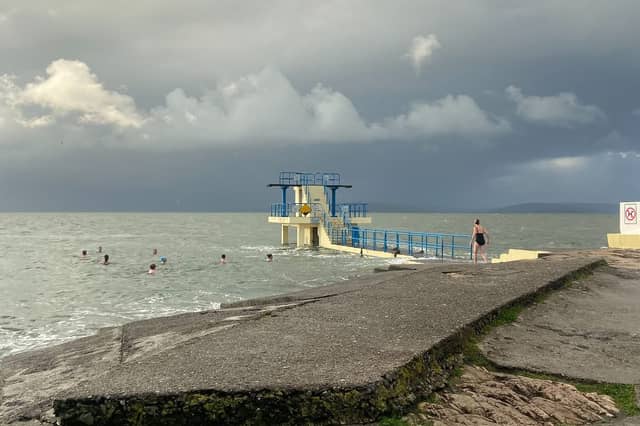

Galway faces one of the highest coastal flooding risks in Ireland, a new national study has found.
Researchers from University College Cork, working on the EPA-funded DETECT project, analysed the entire Irish coastline in detailed sections just 250 metres apart.
The results show Galway stands out as a major ‘exposure hotspot’, with each stretch of coastline ranked from very low to very high risk based on factors such as sea level rise, storms and coastal conditions.
“The exposure hotspots are areas within 500m of a segment of coast categorised as ‘Very High Exposure’ in our study,” geoscientist and PhD researcher Kevin Walsh told the Galway City Tribune.
“This essentially means it is an area which is likely to be affected by flooding, storm damage and/or erosion. That determination is based on the physical characteristics of the coast and the climatic forces which act on it.”
Around Salthill alone, Walsh said an estimated 7,500 people are living within one of these high-risk zones, while across the city nearly 13% of the population is in areas vulnerable to coastal flooding.
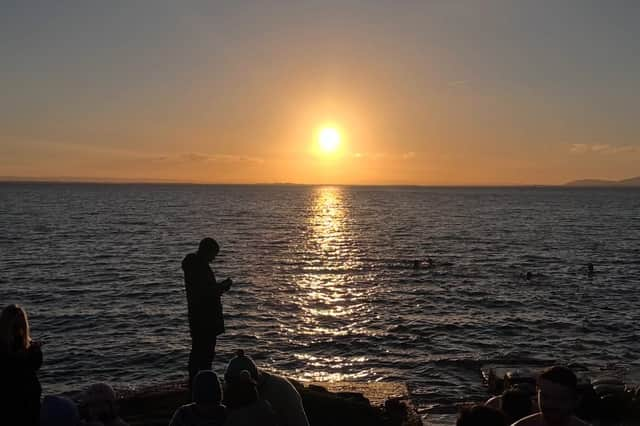
“Given ours was a national study, it was unfeasible to work out what the precise impacts on coastal populations might be for those people residing in exposure hotspots,” said Walsh.
“The severity of the impacts varies from place to place. However, given that flooding from storm surges appears to be the largest threat facing Galway City, those people residing within a hotspot will be more at risk to things like property damage from flooding, loss of access due to road flooding, or damage to local infrastructure during a storm.”
Flooding from storm surges appears to be the largest threat facing Galway City,
Such risks were highlighted during Storm Debi in 2023, which was particularly destructive, when high tides combined with driving south-westerly winds.
The study warns that, while flood defences are typically designed to withstand a “one in 200 year” event, climate change means such events could occur more frequently in the future.
Rising sea levels, it stated, are expected to increase by at least 25cm in Galway and will add further pressure.
The DETECT project uses advanced tools such as drone mapping, 3D modelling and computer simulations to better predict how coastlines will change.
“We used 30 years of records for our climatological data from other models, sourced from the Copernicus Climate Change Service,” Walsh described.
“This gave us both annual trends, such as rates of sea-level rise, and extremes, such as wave heights during storms. We didn’t perform a time series analysis, so I can’t say for sure if storms are getting worse for Galway. But from a national perspective there’s some evidence to show storms are increasing in severity and frequency in the last few decades. We know for sure that sea-levels are rising, how much they will depends on future actions and changes to oceanic circulation.
There’s some evidence to show storms are increasing in severity and frequency in the last few decades.
“All to say that precise future predictions are very tricky, the allowances the OPW currently have in their designs for the proposed coastal flood defence scheme seem sensible to me, but how long they will serve as be effective for remains to be seen.”
Locally, there is a growing sense that storm activity has intensified in recent years. For Peter Kelly of The Village Salthill group, the change has been noticeable for both local businesses and the community.
“As a kid, if you had two storms it was a big deal,” he said.
“In the last ten years, we have had four or five very serious storms. There is something wrong and the climate has changed. It has come up quite a bit and we have had a few serious episodes.”
The study findings come just months after heated discussions at a Galway City Council meeting, where concerns were raised about delays to the Coirib go Cósta flood relief scheme.
At that meeting, Mayor Mike Cubbard (Ind) described the timeline for delivery, which is currently expected by 2030, as “daft” and hard to believe.
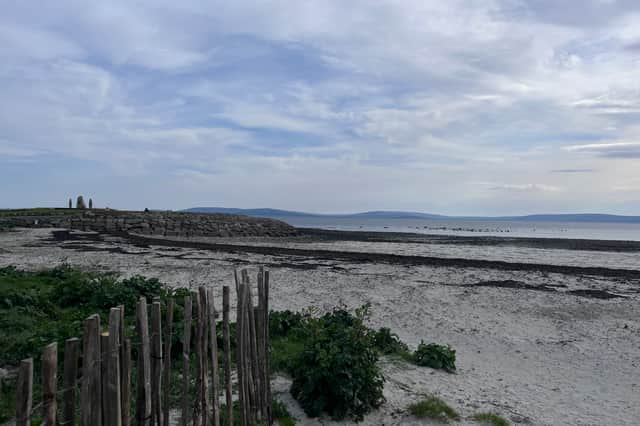
Existing flood defences in Salthill relied heavily on the use of groynes, which are low barriers built out into the sea, trapping sand and helping to protect beaches from erosion.
However, according to Walsh, these may have unintended consequences.
“Erosion is also an issue here, with much of the area along the Salthill Promenade reclaimed from the sea during the last century,” he said.
“Erosion has historically been managed here by construction of groynes offshore from the promenade and placement of rock revetments. These so called ‘hold the line’ responses aim to maintain the coastline at its present location.
Disrupting the movement of sediment, through structures like groynes, can have negative unintended consequences.
“Coasts however, especially soft sedimentary coasts, are inherently dynamic and change in response to environmental forces. Disrupting the movement of sediment, through structures like groynes, can have negative unintended consequences downstream from the area they protect – such as starving beaches of sediment.”
For the Salthill community, new flood defences cannot come quickly enough. However, the city is surrounded by environmentally protected areas, meaning extensive surveys and planning are required before construction can begin.
We want to conserve the coastline, but if we don’t do something radical, we won’t have a coastline.
“Everybody in Salthill is looking forward to that getting done on a speedy basis,” said Kelly.
“From talking to people, what is happening about flood defences is a concern. It is not about building a wall. It must be sustainable. It must be something for future generations, and not just a stop gap.
“There are so many obstacles to overcome. From the prom in Salthill to Silverstrand is a Special Area of Conservation.
“There are times that can hold things up almost irrationally. That is one of the bugbears for a lot of people. We want to conserve the coastline, but if we don’t do something radical, we won’t have a coastline. We live beside the coastline. There is an inherent risk with that.”
The next stage of the Coirib go Cósta scheme will focus on public consultation.