

Major state intervention planned to restore cutaway Galway bogs
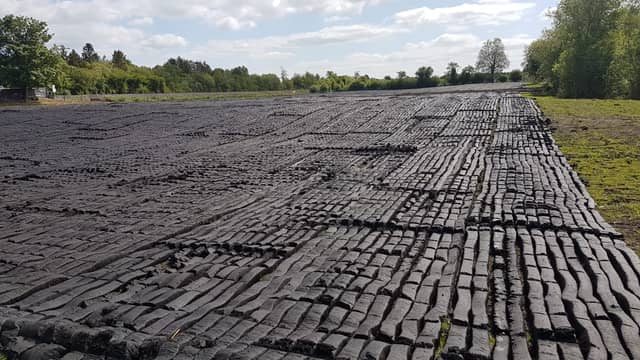

Contractors will dig ‘borrow pits’ into the bog to excavate raw peat for drain dams, while heavy plant machinery and chainsaw crews will fell trees and scrub on cutover areas to open access lines.
A substantial area of one of Ireland’s most westerly intact raised bogs has been cut away and drained, prompting state plans for major intervention across two protected Galway peatland networks.
The projects will see heavy machinery, excavation teams, and drainage contractors deployed across Monivea Bog outside Athenry and Addergoole Bog on the eastern shore of Lough Corrib to construct extensive networks of peat and plastic dams.
Official evaluation audits reveal that active raised bogs, degraded bogs capable of natural regeneration, and associated peat depression habitats across both Special Areas of Conservation are currently in “bad” and “unfavourable” ecological condition.
The uncut high bog at Addergoole, which forms part of the 20,556-hectare Lough Corrib conservation zone, is facing ongoing degradation from historical peat cutting, artificial drainage, and burning.
Further east at Monivea Bog, located 5km northeast of Athenry across the townlands of Corrantarrmud, Newcastle, Glenaslat, and Lenamor, peat cutting has left extensive cutover margins and access tracks carved into the high bog.
The planned restoration schemes were referred to the Ecological Assessment Unit of the Department of Housing, Local Government and Heritage by the minister, and have now received approval.
The assessment team determined that neither scheme requires a Stage Two Appropriate Assessment, classifying both operations as necessary conservation measures directly intended to raise depleted water table levels.
The construction phase of the works will cause ground disturbance and release peat silt downstream into adjoining water networks, including watercourses located just 810 metres west of the Lough Corrib SAC boundary at Monivea, according to the assessment.
Contractors will dig “borrow pits” into the bog to excavate raw peat for drain dams, while heavy plant machinery and chainsaw crews will fell trees and scrub on cutover areas to open access lines.
The Monivea works will see the construction of contour, finger, and trench bunds, with trenches excavated up to 1.5 metres deep and two metres wide, topped by embankments standing up to 0.7 metres above ground level to trap surface water.
Machinery will be strictly prohibited from entering fragile, waterlogged zones where ground conditions are unstable, requiring crews to haul and install plastic dams entirely by hand across active high bogs and sensitive moss lawns.
Tree and scrub felling will be confined to windows outside the statutory bird nesting season, while contractors at Lough Corrib must stagger operations to avoid disturbing breeding and wintering bird populations, including the hen harrier and the Greenland white-fronted goose.
The documentation also records wider environmental strains on the 18,240-hectare Lough Corrib basin itself, where intensified agriculture and uncontrolled sewage discharges along its eastern shores are driving localised water pollution.