

The drugs that keep us alive a little bit longer


Commutes to and from Galway city can be fraught enough, without the added stress of a continuous news stream on the radio about the Middle East War and the ongoing slaughter of women and children, the battles in Ukraine, and reminders about how much fuel and home heating oil is going to go up with each passing day.
Headlines, I can absorb for a time, but as a rule of thumb, l find the Lyric FM channel to provide a little oasis of calm, far removed from the desert of wars and traffic jams.
There's Marty Whelan for the inward journey with his whimsical mix of humour and a not-too-heavy menu of classical music and also occasional forays into the worlds of kids' tunes, country classics, and our own Seán Keane, here and there.
Lorcan Murray is the evening equivalent on the way home, but here and there I'll switch to a bit of hard news . . . normally happening when a particularly high-pitched soprano [is there any other type?] tries to take over the cab of the car.
Anyway, on one such of those latter occasions last week, I happened to tune into Drivetime on RTE Radio 1, where a Dr Ruth Freeman, Director of Strategy and Communication for Science Foundation Ireland, was giving a very informative and entertaining account, of how many modern medicines had started out as one thing and ended up as another.
It was one of those radio news pieces that I wanted to go on for a while longer
Sounds very strange, and it was too. It was one of those radio news pieces that I wanted to go on for a while longer, as she outlined the origins of some drugs, whose starting off points gave no indication of what they would end up as.
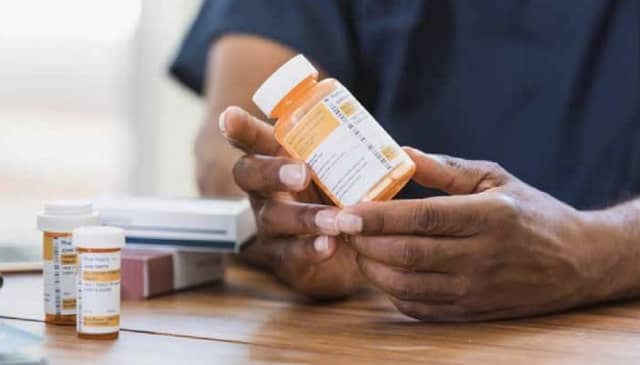
It prompted a little bit of amateur research into the names of drugs which would not mean anything to 99% of the population. Take for example the case of Sildenafil, which was researched and developed by Pfizer scientists as a treatment for angina, high blood pressure and a range of heart diseases.
While it mightn't have been overly successful in that area of medicine, researchers noticed one significant side-effect which led to the product becoming a ‘chart topper’ in the world drug sales charts. In cases that they studied, the unexpected dividend was that it helped to treat male impotency and its new name – Viagra – is one that the whole world is now familiar with.
Ruth Freeman also pointed out in her radio interview that Viagra was also of benefit to high altitude climbers in controlling blood pressure in the lungs. So the next time someone asks you what Sildenafil is . . . well, you'll have the answer for them.
In cases too, the more things change the more they stay the same, and what is interesting to note is the link between some of our most effective modern drug treatments and natural products which date back thousands of years.
Take for example, aspirin, whose origins can be traced back hundreds of years, probably thousands, to the bark of willow trees and their use in Roman times when its leaves were pounded and boiled in vinegar. The antidote in the willow tree by-product was a salicylic acid, later to be synthesised into aspirin, one of the most mass produced early painkillers.
Aspirin might have been bypassed in recent decades by more powerful painkillers, but again along the way, another unexpected dividend was delivered by this drug – it was identified in research as a key preventative agent for blood clots, leading to widespread use for patients in the stroke risk category.
One of the most spectacular evolutions in drugs occurred with semaglutide which sells under the brand name of Ozempic and is a common treatment for Type 2 diabetes. A hormone discovered in the venom/saliva of the Gila Monster lizard – in parts of southern USA and Mexico – was found to control and regulate blood sugar levels over extended periods.
The good news didn't end there with Ozempic, as diabetics being treated with the drug, began to experience weight loss, which led to its marketing as a treatment for obesity. In addition to that, people with addiction problems, whether it be alcohol or drugs, lowered their risk of substance abuse, when on Ozempic. Over more recent times, as Dr. Ruth Freeman outlined, the drug now has also been found to develop the regrowth and rebuilding of cartilage, so it's a real 'all-rounder' in terms of treatment versatility!
Another drug which found a new role in life is Minoxidil, initially researched and developed to treat hypertension [high blood pressure], and especially in more severe cases, where patients hadn't responded to other drug treatments. It helped to prevent sodium and potassium retention in patients. One other 'side effect' was also noticed in patients – when on the drug, they experienced a resurgence in hair growth – and yes, you've guessed it, this led to the explosion in the production of hair restoration products more commonly known as Rogaine, Regaine or Loninten, making billions of dollars/euro for the drug companies.
One of the biggest ‘re-route, game changers’ in treatment and in life-saving was a drug known as AZT [azidothymidine] developed in the USA by a researcher charged with coming up with a product to thwart cancer, by inserting itself into the DNA of cancer cells and stymieing their ability to reproduce. Alas, it had only limited success in that area, often being described as a failed cancer drug, but lo-and-behold, in combination with another drug, NRTI, it brought about a critical breakthrough in the treatment of HIV [human immunodeficiency virus].
All this 'ramble' brought about by a high-pitched soprano [nothing personal!] on Lyric FM, which prompted me to switch frequency and to hear a very insightful interview with Dr Ruth Freeman, who made us all a little bit more aware of the changes and advances that drugs have made to extending our time spans on this little planet.