

Giving renewed hope to people with disabilities

Talking Sport with Stephen Glennon
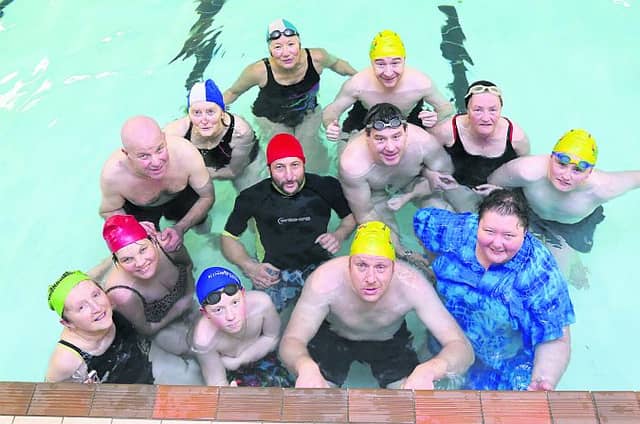
MARY Arrigan-Langan must be close to canonisation at this stage. For 34 years, the founder of Octopus Swimming Club – established in 1981 to cater for people with disabilities – has been giving her time freely and generously in an effort to improve the quality of life of those less fortunate.
Indeed, the word ‘Saint’ is by no means a stretch of the imagination. A genteel woman with a caring nature, over the course of three decades, she has touched so many lives, offering those with disabilities a freedom and independence that they might not otherwise have known.
Octopus is no ordinary swimming club. It operates using the ‘Halliwick’ concept, which, basically, allows people with disabilities – be it spinal cord, amputee, head injury, stroke, spina-bifida, cerebral palsy, multiple sclerosis, visual impairment, among others – to become “water free”.
In other words, no buoyancy aids are used with one-to-one volunteer helpers employed to aid those with a disability until they can become comfortable and, in a lot of cases, independent in the water. This is done by developing breathing control, balance and relaxation techniques.
Mary – a daughter of Paddy Arrigan, a former Irish and All-Army swimming champion who dominated backstroke events in the 1950s, breaking records and representing Ireland – was first introduced to the Halliwick concept when nursing in England
Initially, she had contemplated venturing into physiotherapy, specialising in hydrotherapy, but when she saw the Halliwick method in operation she immediately knew this was what she wanted to do. “I like helping people to reach their full potential,” she says.
“If somebody is stuck in a wheelchair all day, it is great to see their reaction when you put them in water and see their body move and be free! When they start, they won’t be able to do an awful lot but when you teach them to be more balanced in the water and have good breathe control, they become relaxed. And when somebody is completely relaxed, they can float and eventually they can move and swim.”
Upon Mary’s return from England in 1980, she set about starting up a club in Galway. At the time, a lot of institutions catering for people with learning disabilities were already offering swimming or some kind of hydrotherapy, so she sought to focus on those with physical disabilities.
At first, she received a lukewarm reception from the several organisations she approached; that was until she contacted Ernie Boucher of the Irish Wheelchair Association. “He said they would be very interested and even asked did we need help with transport,” notes the Merlin Park nurse.
For more, read this week’s Galway City Tribune.