

Martin Breheny: Galway must repeat Cork exploits on biggest stage
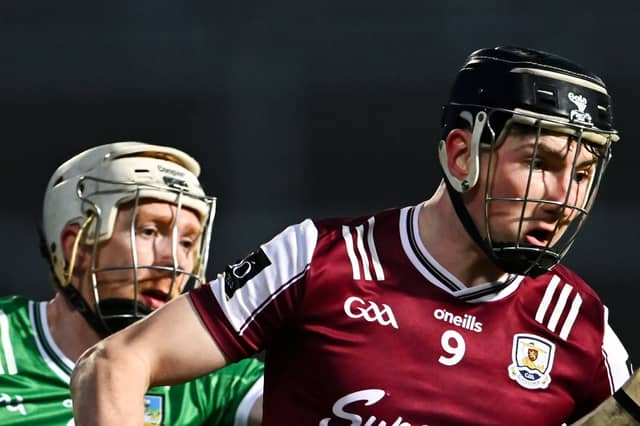

I spent a lot of time with Brian Cody in 2009, working on his autobiography. It was an enjoyable project in itself, but there was an added bonus in that it gave me a fascinating insight into the mind of one of hurling’s sharpest operators.
There was a clear logic in his thought processes, accompanied by unwavering self-confidence. That shouldn’t be mistaken for arrogance, but rather a self-reliance, which obviously permeated through to his players.
The bigger the game, the more he thrived, as it tested him and his team. It was as if he drew from a well of certainty and a belief that whatever challenge arose, he could provide the off-field solution and then hand over responsibility to the team. It wasn’t him or them – it was both.
And then there was Galway! Of all the opposition Kilkenny faced, Galway probably troubled him most in terms of their capacity to produce something different – often when least expected.
It happened in the 2001 and 2005 All-Ireland semi-finals, when they delivered exceptional performances. However, they didn’t finish the task, losing the finals to Tipperary and Cork respectively on days when they came nowhere near reaching the semi-final heights.
Cody’s plaintive assessment? “I remember watching the 2005 final and thinking, why the hell do Galway reserve those special days for us and then don’t repeat it next time?”
It happened again in 2012 when Galway hammered Kilkenny by ten points in the Leinster final, drew with them in the All-Ireland final and lost the replay by eleven points.
All this is relevant heading into Sunday’s final. Galway produced a sensational performance against Cork last Saturday week, recording their biggest semi-final win since beating Kilkenny – also by eleven points - forty years ago. They lost the 1986 final to Cork.
They were very good in the 1975-79-85-93 semi-finals too, but lost all the finals.
So now the question is whether history will continue to repeat itself and a powerful semi-final performance is followed by a drop in wattage in the final?
Micheál Donoghue knows the history, but there’s nothing he can do about except work to avoid a drop-off.
Limerick supporters see the final as being teed up perfectly. A swashbuckling semi-final exhibition by Galway, whereas Limerick were stretched close to breaking point by Clare – what could be better to focus minds and banish any hint of over-confidence?
Advantage Limerick then? In theory, yes, but there’s an unknown element too. It goes back to 2018, the breakthrough year for Limerick’s best-ever generation. They went into the final as 6/4 outsiders against Galway, the 8/13 favourites as defending champions.
The odds seemed about right, only to be shown up as lopsided on the day. Limerick won by a point, having seen an eight-point advantage sliced to the minimum in the final minutes.
A one-point defeat flattered Galway, who were out-of-sorts most of the way. Even in the closing flourish, it looked more a case of Limerick tightening up once the finish line came into sight rather than Galway doing anything especially impressive. Both of their goals should have been prevented.
So how is this pertinent now? It comes down to attitude and a belief that the past counts for nothing. Limerick clearly disregarded Galway’s higher status in 2018, something that was evident from the start.
They were sharp, smart and aggressive, with one first-half point providing the perfect example. Pádraic Mannion spotted Joe Canning and tried to deliver a 40-metre pass, only for Declan Hannon to read it perfectly, make a dashing interception and fire over a point.
It was doubly-inspiring for Limerick to see their captain and centre-back get his timing so spot on and thwart two of Galway’s big leaders. It was that sort of day for Limerick.
Galway need to create a similar vibe on Sunday, if they are to have chance of upsetting the odds. They are priced even longer (9/4) than Limerick were in 2018, but since they were good enough to score a total of 6-55 against Dublin and Cork, they have every reason to feel good about themselves.
Back to Brian Cody again. After losing to Cork by eight points in the 2004 final and being hit for 5-18 against Galway in the 2005 semi-final, there was a widespread view that Kilkenny were in serious decline.
Even when they reached the 2006 final, the general feeling was that they were some way off the standards set by Cork, the 2004-05 champions.
Cork had developed an impressive running game, complete with snappy hand-passing, which they used cleverly.
Limerick do much the same now, albeit in a more advanced form, which also involves space-creating passes off the hurley. They’re the best in the business at that.
How to counter it? Here’s Cody’s description in his book of how Kilkenny went about attacking one of Cork’s best assets in 2006.
“The only antidote to that type of game is hard work and total concentration. When a Cork player got the ball, I wanted two men converging on him. If he got his pass away, I wanted two men on the intended recipient. We had to be in their faces, behind their backs, coming in from the side and the other side too.
“I wanted the black-and-amber to be a blur in front of their eyes all the time. I wanted it to look big, powerful and confident. Wherever Cork players turned, they were to see a Kilkenny man approaching. And if they turned the other way, another Kilkenny man was to be steaming in. No let-up, no hesitation, no compromise”.
It sounds like something Donoghue might be preaching to his squad.
Oh, and by the way, Kilkenny beat Cork by three points in 2006 and went on to win seven of the next nine All-Ireland titles.