

Pensioner died following teeth extractions
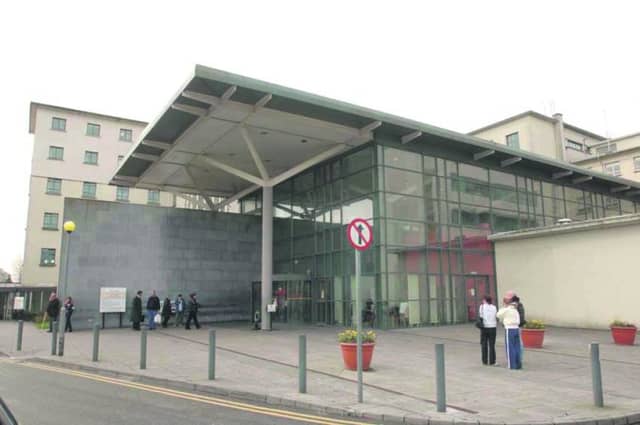

A 71 years old man died after suffering a fatal reaction to the generic form of an antibiotic, which had been prescribed following the extraction of teeth in UHG last summer, an Inquest into his death heard.
Coroner for West Galway, Dr Ciaran MacLoughlin, explained to the man’s family that owing to his previous history of taking a similar drug, it could not have been predicted that death would result – none of the medical witnesses had ever experienced such an outcome when treating anaphylactic shock.
Patrick Naughton of 155 Corrib Park, Newcastle, walked to nearby University Hospital Galway on the morning of his death, May 23 last. He had an appointment for extractions at 8am, and was picked up by his daughter, Louise King, at 1.05pm.
She said he was in perfect health, and had no complaints apart from a tingling sensation in his tongue, as the local anaesthetic wore off.
They went shopping and picked up his prescription for an antibiotic, ‘Co-amoxiclav’ – a penicillin-based drug, which is better known by its trademark/proprietary name, ‘Augmentin’.
Being on a medical card, Mr Naughton was sold a generic form of Augmentin – of which there are many, the Inquest heard.
After his dinner, he took the antibiotic, lay down for a short time, and then came downstairs clutching his chest.
“His speech was impaired, and his tongue was severely swelled,” Mrs King recalled.
He was driven to A&E immediately, but died later that night.
Oral surgeon, Patrick McCann, told the inquiry that Mr Naughton’s existing medications – which had previously included Augmentin – were noted on his chart before the procedure, so it was well-documented that he had had no known allergy to penicillin.
“The allergic reaction was not predicted,” he said.
He added that the anaphylactic shock that ultimately caused the death was not a delayed reaction to the local anaesthetic and sedative given to Mr Naughton prior to the dental procedure.
The Inquest heard that when Mr Naughton presented to A&E his GCS – which measures brain function – was 15 out of a possible 15. He was given the standard treatment for anaphylactic shock, which included oxygen, antihistamines, steroids and adrenaline, but his condition deteriorated.
Despite his swollen tongue, Mr Naughton initially had 95% oxygen saturation, but this gradually decreased, and the last resort was to perform a tracheotomy – a difficult, but necessary, procedure to install a definitive airway.
However, the consultant anaesthetist on call, Dr Leo Kevin, said that owing to Mr Naughton’s already large – and now swollen – neck, it was impossible for emergency medical staff to identify the usual ‘landmarks’ such as the Adam’s Apple, so they could not perform the procedure there and then.
“The only safe way to do a tracheotomy in this situation is a slow dissection by an ENT surgeon in the operating room,” he explained.
However, within seconds of arriving, Mr Naughton had no pulse, and chest compressions were commenced. After one hour of CPR, resuscitation ceased, and he was pronounced dead at 10.30pm.
He said that Mr Naughton’s pre-existing medical problems had shortened the odds of survival.
“A young person with anaphylactic shock is more likely to be retrievable,” he said.
Mr Kevin told the Inquest that he suspected Mr Naughton had suffered a cardiac arrest on the operating table. He agreed with the Coroner, that the stress of the allergic reaction had likely caused him to go into heart failure.
However, consultant pathologist, Dr Michael Tan, said that he could find no convincing evidence, when examining the heart muscle under the microscope, to say that a heart attack was the cause of death.
He concluded that the anaphylactic shock was “most consistent” with a severe reaction to an antibiotic.
Dr MacLoughlin returned a verdict in accordance with the medical evidence, that death was caused by asphyxia, due to anaphylactic shock, due to a severe allergic reaction to Co-omoxyclav.
“You hear occasionally of people dying from a severe reaction to peanuts or wasp stings, this was the same kind of thing – normally, it is quite successfully treated,” the Coroner said.
“Because of his previous history of being given this chemical, doctors felt he had no known allergy, and couldn’t have expected this to happen.”
He offered his sincere sympathies to Mr Naughton’s children, in-laws, and other family members who attended the Inquest, on the tragic and unexpected circumstances of his death.