

Policy can’t be divorced from reality of politics

Just after half past ten on Monday night, a statement dropped into our inboxes. It hadn’t been a particularly busy day, so a late-night communication from the Department of Education was unusual.
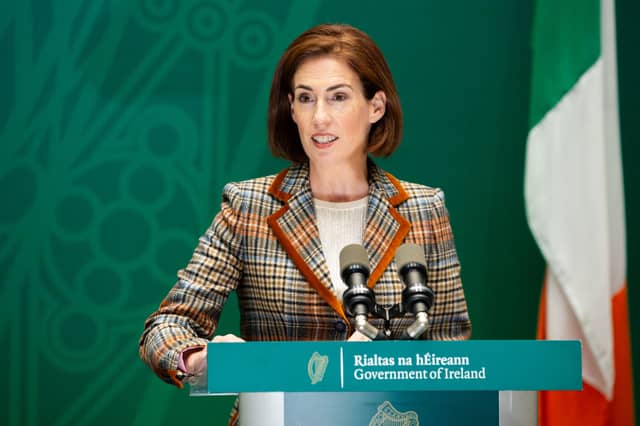
Earlier that evening, a meeting had taken place involving the Minister for Education, Hildegard Naughton, the Minister of State, Michael Moynihan, the Taoiseach, Micheál Martin, and the Tánaiste, Simon Harris.
The wording required careful reading. After discussions with government leaders, it said, it had been agreed that all schools reviewed by the National Council for Special Education and allocated additional resources would receive them in the coming year. Crucially, no reductions would take effect in the 2026/2027 school year.
It was a climbdown.
Only days earlier, the government had announced changes to the special needs assistant (SNA) allocation model. The headline message was positive. Overall SNA numbers would increase. The government pointed to a 40 per cent rise over five years and noted that there are now 25,000 SNAs in the system, alongside 80,000 teachers. By any measure, that is a substantial workforce.
But the sting was in the details. While the total number of SNAs would grow, 170 schools were told their individual allocations would fall.
For those schools, the broader statistics were irrelevant. What mattered was that they faced losing support staff. Principals contacted parents. Parents contacted public representatives.
Within hours, what might have been framed as a good-news story escalated into a political crisis.
The government’s initial response was to defend the decision. Ministers emphasised the overall increase and argued that resources were being distributed more fairly. The system, they maintained, needed updating.
And in truth, there is an argument for reform. The SNA model has developed in a somewhat ad hoc fashion. Historically, resources were allocated to schools rather than to individual pupils.
Over time, that has produced anomalies. A more rational system might focus on assessed individual need, making the physical location of a pupil less significant in determining support.
Yet reform in this area presents a dilemma. If need in a school rises, it is politically and practically straightforward to increase SNA numbers. But what happens when assessed need falls? In any genuinely needs-based model, reductions must be possible. Otherwise, the system simply ratchets upwards, regardless of demographic change.
That was the logic underpinning the review. The difficulty lay in its execution.
The circular sent to schools effectively informed some that they would have to shed SNA posts. However carefully framed, that reads like a guillotine.
For parents of vulnerable children, the message was stark: support could be taken away. For school leaders, it introduced uncertainty into staffing plans. Intellectually coherent or not, it was emotionally explosive.
The issue dominated parliamentary party meetings. Backbench TDs and senators, acutely aware of the reaction in their constituencies, demanded change. The government shifted position in stages. First, a robust defence. Then, a pause. Then confirmation that no reductions affecting the 170 schools would proceed. A review was announced — and effectively a review of the review.
By Monday night, the outcome was predictable. An additional €17 million was found to maintain existing allocations for the next two years. The immediate crisis was defused.
So what now?
In the short term, schools requiring additional SNAs will receive them. The government has bought itself time to reconsider how best to redesign the allocation model. The Taoiseach argued that it would be absurd if systems could never be reviewed once introduced, because needs change. That is plainly true.
Ministers later described the episode as a communications failure. There was certainly a failure of presentation. The human reaction to potential loss was underestimated. Once fear took hold, statistical arguments about overall increases were never going to calm the situation.
But it was more than a messaging problem. Policy design cannot be divorced from political reality. When dealing with children with additional needs, sensitivity is paramount. Announcing reductions — however rational on paper — without first building public understanding was always likely to provoke alarm.
There is also a broader lesson. Politicians speak often about decisiveness, particularly when in opposition. In government, however, the incentives shift. Stability, survival and the avoidance of controversy loom larger. The line of least resistance becomes tempting.
The review may have been logically sound in theory. But it failed to anticipate the emotional response it would generate. For parents who feared their child might lose essential support, the debate was never abstract. It was immediate and personal.
In the longer term, the underlying issue has not disappeared. The present system is not equitable. Some schools may well be under-resourced relative to others. Demographics will continue to shift. Pressures on public spending will persist. At some point, a government will again have to confront how SNAs are allocated. Trade-offs are unavoidable.
For now, though, there is little appetite within government to reopen the question.
It was not a comfortable week for the ministerial team. Michael Moynihan, who has delegated responsibility for special education, bore much of the immediate criticism and faced difficult media appearances.
Yet ultimate responsibility rests with the senior minister, Hildegarde Naughton, and she has not emerged unscathed.
Harry McGee is political correspondent of the Irish Times.