

Arts Council criticises ‘poor state’ of Galway's cultural buildings
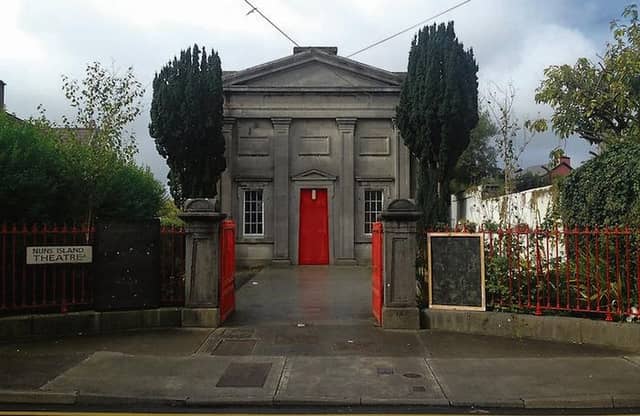

The Arts Council has expressed concern over the poor state of cultural infrastructure in Galway City.
In a submission made to the Draft City Development Plan 2023-29, the national agency with responsibility for the arts highlighted issues at Galway Arts Centre on Dominick Street and Nuns Island Theatre – both owned by the City Council.
“The Arts Council recognises the ongoing concern over a number of years regarding the maintenance and general upkeep of some cultural buildings which might impede a quality experience for artists and audiences.”
It recommended that the Development Plan should include “greater intent and commitment in its spatial policy objectives to ensure and support the quality and enhancement of physical assets which contribute towards cultural infrastructure provision, particularly those assets which are within the ownership of the local authority”.
The plan, which will serve as a guiding document for all development in the city over the next six years, should make provision for an audit of existing cultural spaces and should include a commitment that the Council will ensure these facilities are to a standard reflecting the ‘ambition and legacy’ of a former European Capital of Culture.
The submission added that the plan should also seek to establish the city’s need for enhanced and/or new cultural spaces “proportionate to its designation as European Capital of Culture (ECOC)”.
A true legacy of Galway’s designation as ECOC 2020 would be to use the next City Development Plan to build upon achieving that title.
The Arts Council proposed that clarity is needed around who was responsible for the delivery of ‘new and improved arts and culture facilities’ as set out in the draft plan.
“Further to that, the Arts Council would recommend that such provision is based on an audit of availability/deficiency of such infrastructure.”
The next Development Plan for Galway should, like the plan of Dublin City Council, include a ‘specific provision’ for artist live-work space in light of the increased pressure on artists to find affordable accommodation and work spaces in the aftermath of Covid-19, said the Arts Council’s submission.
The experience of the pandemic had demonstrated how essential the arts and culture are to the well-being of the country.
“The pandemic highlighted the importance of providing high-quality public spaces to allow for unhindered formal and informal community engagement.
“There is now a heightened importance for the provision of functional indoor and outdoor spaces which can provide for a diversity of activity including arts and culture as a component part of community planning and placemaking.”
The body also proposes that consideration be given to including a policy objective recognising ‘the habitual value’ of the historic, artistic, architectural, social and cultural history in the city centre, seeking to avoid its loss among ‘regeneration’ programmes.
Reflective of the Arts Council’s architecture policy, it would also “welcome the inclusion in the Development Plan of an objective that recognises and seeks to protect buildings of contemporary architectural significance and that encourages the development of high-quality contemporary architecture in public buildings”.
This measure would increase opportunities for the public to experience buildings and spaces of high architectural quality ‘in their everyday lives’.
The provision of arts and culture contributes to community and society in a number of ways – creating stronger communities and creating a ‘vibrant and distinctive’ sense of place, as well as enhancing the economic value of an area, the submission adds.