

From Lord Haw Haw to Yeats ‘The Races’ have never failed to inspire


Country Living with Francis Farragher
It’s one of the notable landmarks of each passing year taking its place in those diary dates of our mind like Christmas [I know, shocking to mention that word in July], Easter and Halloween . . . yes, The Races represent the peak of the midsummer in Galway minds, and the next phrase that tends to crop is: ‘back to school’.
For a lot of people across the land, and indeed from foreign shores as well, it’s something akin to an annual pilgrimage when the hotel prices shoot up for the week and even if you have that excess cash to splash out, many of the inn websites will have ‘No Availability’ labels on their websites from July 28 into the early days of August.
The history of the ‘summer madness’ that we associate with the Galway Races didn’t happen today or yesterday with the first meeting at Ballybrit taking place on the Tuesday of August 17, 1869, all of 158-years ago with the Galway Plate the big attraction having a purse of 100 sovereigns for the winner. By the way, while a gold sovereign only had a nominal value of one pound sterling, today they are worth around €1,000 apiece.
However, according to historical sources, the racing of horses can be traced back to the mid-1700 with meetings of sorts taking place in places like Tuam [Bermingham House], Kilconnell, Ballymoe and Carraroe. Back in October 21, 1754, a horse called Prim won the £20 first prize at Tuam Races for ‘freeholders and inhabitants’.
In a short historical piece penned by that all-round man of books, words and the arts, Tom Kenny, he recounts a major milestone in the development of the Galway Races when they were first broadcast on radio in 1929, before featuring in a number of Lord Haw Haw’s [William Joyce of Galway-Mayo origins] German propaganda on-air rants [‘Germany Calling’] during World War 11.
According to Tom Kenny’s little historical dip back into the war years, in one of Lord Haw Haw’s broadcasts, he suggested that the Galway Race Committee might ‘spruce up the place [Ballybrit racecourse] as there was a good chance that one Adolf Hitler could attend the next meeting. Like a lot of other tips around The Races, this was one ‘long shot’ that was never destined to materialise!
Famous for having the longest bar in the world which dates back to the mid-1920s, The Races, over the past century or so, evolved into a real social occasion, even for people like myself who had a scant knowledge of the gee-gees. ‘Going racing’ turned into something of an annual social event.
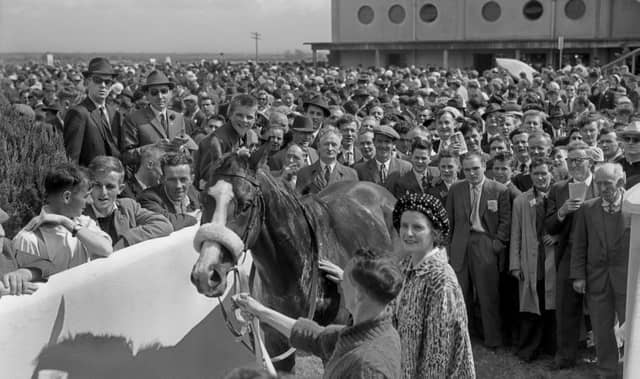
Pictured: Connacht Tribune photographer, JOE O’SHAUGHNESSY, delved into the files of the paper and discovered this prize-winner [possibly The Plate or Hurdle] from the summer of 1962 with a huge crowd in the background. [Anyone with info/details on the picture can contact: [email protected]].