

Western Development Commission advocates more coordinated approach to diaspora engagement
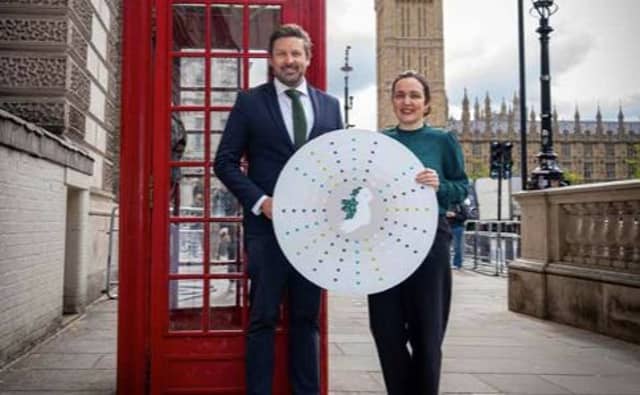

The West and Northwest could unlock significant new opportunities for communities, enterprise, tourism, talent attraction and international connectivity through a stronger and more coordinated approach to diaspora engagement.
That’s according to a new report launched by the Western Development Commission this week.
Connected Communities, Global Relationships is the first comprehensive regional study of its kind and examines how people and organisations in Donegal, Sligo, Leitrim, Roscommon, Mayo, Galway and Clare work to build meaningful links with people overseas who retain family, cultural, professional and emotional connections to the region.
Drawing on 240 responses representing 178 organisations and groups, the research found that diaspora engagement is notably strong across the region.
That, according to the report, is led by local authorities, community organisations, heritage groups, tourism projects, sports clubs and educational institutions, with much of the activity underpinned by volunteerism and personal commitment.
Forty-seven per cent of respondents said they already actively engaged with the diaspora, while a further 35 per cent said they would like to do more than they are currently.
The strongest motivation identified was maintaining bonds of friendship and connection, which ranked ahead of fundraising or straightforward commercial return.
Respondents also pointed to the importance of diaspora links in supporting tourism, local pride, skills exchange, business opportunities and long-term community resilience.
However, the detailed report also found that much of this work is taking place without dedicated resources, shared systems or consistent strategic support.
Many of those organisations surveyed cited lack of time, staffing capacity and difficulty maintaining long-term relationships despite strong goodwill and growing demand.
The study identified key international links for the region across Britain, North America, Australia and mainland Europe, with cities such as London, Boston and New York continuing to feature strongly as important centres of connection.
“For the West and Northwest, diaspora relationships represent a significant strategic asset,” said Allan Mulrooney, Chief Executive of the Western Development Commission.
“They include skills, experience, networks, advocacy, cultural capital and investment potential,” he revealed.
"Few regions have experienced migration on the scale seen here or retain such strong emotional and practical connections across generations,” he continued.
“With stronger coordination, dedicated support and sustained ambition, the potential exists not only to deepen existing relationships, but to unlock new opportunities for communities, enterprise and future generations across the region,” he added.
Dr Aisling Moroney, who led the research on behalf of the WDC, said that the study clearly showed the foundations for stronger diaspora engagement already exist across the West and Northwest.
“Communities, local authorities, festivals, heritage groups and many other kinds of organisations are maintaining valuable relationships every day, often through volunteer effort and with limited resources,” she said.
“What emerged from the research was not a lack of interest or ambition, but a clear appetite to do more and to strengthen what already exists.
“A notable theme of the work being done is the strong sense of responsibility towards ‘our people abroad’, accompanied by a desire to honour and maintain connections with the generations of people who emigrated from this region.
“So, the kind of diaspora engagement that we are talking about strengthening is not necessarily about ‘asks’ but about mutual respect and mutual benefit,” she added.
The report highlights a series of case studies from across the West and Northwest region, including island communities, festivals, heritage projects, local authority strategies, cultural centres and international initiatives that demonstrate what can be achieved when strong local identity is matched with practical outreach and sustained relationships.
Examples include Inishturk Island in Mayo, where diaspora engagement is helping shape long-term community planning, and the Mary from Dungloe International Arts Festival in Donegal, founded to bring emigrants home and now attracting 45,000 visitors.
The WDC report also pointed to the Global Irish Famine Way project in Roscommon, and heritage-led initiatives in Kilrush in Co Clare helping descendants trace family roots back to specific townlands and homes.
The report recommends stronger regional coordination and networking, improved access to shared communications and engagement tools, more structured collaboration between organisations and a greater focus on converting goodwill into practical action.
It also points to the value of recognising that different diaspora groups may engage for different reasons, from heritage and identity to business opportunity, return migration or skills exchange.
The comprehensive report, Connected Communities, Global Relationships: Findings from Research on Diaspora Engagement in the West and Northwest of Ireland, was commissioned by the Western Development Commission. The study is based on a mixed-methods approach including a regional survey (240 responses), qualitative interviews and case studies.
The Western Development Commission will host a public webinar on Tuesday, June 2, at 11am to examine the report findings and discuss how communities, agencies and diaspora networks can work together to build the next phase of engagement across the region.
To register for this webinar, simply go to Eventbrite and search for Webinar: Diaspora Engagement in the West and Northwest of Ireland.