

Call for clarity on future of Galway LEADER funding
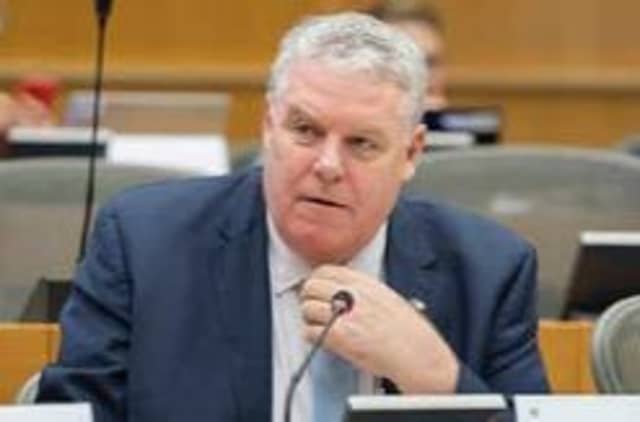

A local MEP has called on the Irish Government to urgently set out what the proposed new EU budget will really mean for LEADER, rural development and local jobs.
LEADER development and partnership companies deliver EU-backed rural funding on the ground, helping local communities, small businesses, social enterprises and rural projects to access support and create jobs.
Local MEP Ciaran Mullooly made the call after meeting LEADER and Local Development Company representatives in the European Parliament last Friday – including Karen Mannion of LDCN and Forum Connemara.
South West Mayo Development Company has also written to Mr Mullooly warning that CAP and LEADER discussions are now at “a critical point”.
The company, established in 1991 to deliver the first LEADER programme, said it is “very concerned about the downward trajectory of LEADER funding” and the impact on “some of the most isolated rural areas in Europe”.
Mr Mullooly said the warning proves the need for urgent clarity.
“When LEADER bodies are already losing experienced staff and telling us the budget is shrinking, Dublin cannot stay silent,” he said.
“We need clear guarantees now that LEADER will be protected, funded and ring-fenced where necessary.”
Speaking after the meeting of the European Parliament’s Regional Development Committee, the MEP said the Commission continues to describe the proposed 2028–2034 budget as offering ‘flexibility’, but warned that rural communities now need clear answers, not vague assurances.
The MEP is calling on Minister for Agriculture Martin Heydon and Minister for Social Protection and Rural and Community Development Dara Calleary to meet LEADER and Local Development Company CEOs in Dublin and give firm commitments on the future of the programme.
“Enough is enough now. We need to know what this will really mean on the ground,” Mr Mullooly said.
“The Commission keeps talking about flexibility, but flexibility for whom? If national governments are being given more room to decide where money goes, then the Irish Government must now give its side of the budget story.”
“At the moment, LEADER is floating between two stools,” he said.
“The Commission says the new budget will be flexible, but we still have no clear assurance from the Irish Government that LEADER will be protected, properly funded and ring-fenced where necessary. The Commission cannot answer for the Irish Government,” he added.
During the committee exchange, DG AGRI defended the Commission’s proposal, saying that “this flexibility is at the core of our proposal on the budget”.
The Commission representative said the aim was to bring “a very high number of different funds” together “in a single fund that is extremely flexible”, while ensuring “a certain minimum ring-fenced amount for agriculture.”
LEADER is key at ground level in rural Ireland and around Europe
The Commission also argued that farming, rural development and wider territorial issues would be dealt with through “a much broader planning process”.
Mr Mullooly said that explanation is not enough for rural Ireland.
“We have heard enough about toolboxes and flexibility. The time has come for clear commitments not flexible ones,” he said.
“LEADER is key at ground level in rural Ireland and around Europe. It is not an abstract line in a Brussels document. It is a practical programme that supports communities, local development, rural jobs, small projects and people who know their own areas best.”
In his committee speech, Mr Mullooly said rural development must not be weakened under the next CAP framework.
“I think it’s essential that our proposals on LEADER and rural development in particular are given priority from a REGI perspective,” he said.
“Simplification and reducing administrative burden and indeed strengthening local delivery are key to ensuring that funding actually reaches communities on the ground and delivers the real impact.”
He said Ministers must now meet directly with the organisations delivering LEADER and provide guarantees.
“We need clear commitments that there will be no job losses, that LEADER will continue, and that adequate funding will be provided for this vital programme,” he said.
“This cannot be left hanging. If the Commission is handing more flexibility to national governments, then the Irish Government must say clearly how it intends to use that flexibility and whether LEADER will be protected.”