

18 tonnes of seaweed used in bid to save extremely rare Connemara habitat
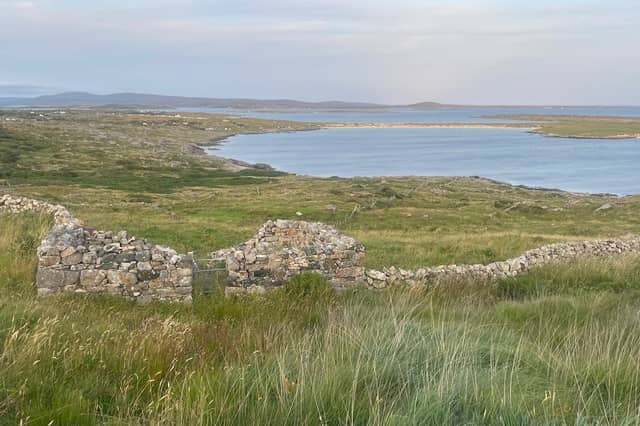

The rare coastal grassland habitat near Roundstone is only found on the northwest coasts of Ireland and Scotland
Around 18 tonnes of seaweed is to be spread across eroded sand dunes near Roundstone as part of a state-backed conservation trial aimed at halting severe habitat loss at Murvey Machair Special Area of Conservation (SAC).
The SAC, located around 6.5km west of Roundstone, is a rare coastal grassland habitat found only on the northwest coasts of Ireland and Scotland.
However, a new report by the Department of Housing, Local Government and Heritage states that overgrazing by sheep and rabbits, combined with rabbit burrowing and natural erosion, has left the site in an “inadequate” conservation condition.
Out of a total machair habitat area of 42.71 hectares within the SAC, approximately 15 hectares now consists of bare sand.
The report also warns that excessive windblown sand caused by the erosion has already resulted in the loss of two former locations of Petalwort, a rare liverwort species protected under the EU Habitats Directive.
The department’s Ecological Assessment Unit has approved the one-off trial involving seaweed.
Under the plan, a licensed local supplier will harvest roughly 18 tonnes of seaweed from the Ballyconneely coastline and transport it by lorry to a nearby yard. From there, it will be brought onto the site in around six tractor-and-trailer loads.
Project officers and local participants will spread and level the seaweed by hand using pitchforks and rakes to a depth of 15cm to 20cm.
The department noted that spreading seaweed is a traditional practice on machair sites in Ireland and Scotland designed to stabilise bare sand, rejuvenate the natural seedbank, and allow native grassland vegetation to regrow.
Researchers will monitor the results using at least five treated one-metre plots alongside five untreated control plots, with quarterly photographic assessments continuing for 18 months until the project concludes in January 2028.
EAU ecologist Laura Connolly signed off on the plan on September 8, concluding that continued erosion would prevent the site from meeting its conservation objectives in the absence of intervention.