

Pauline’s latest book explores the essence of a spirit for all seasons

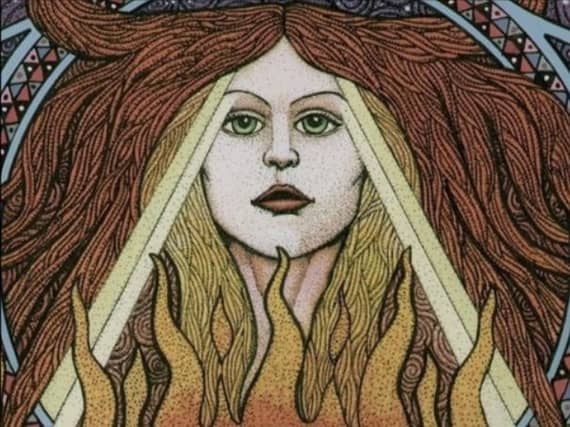

February and the start of Spring is the time of year we most associate with Brigid, who is honoured the length and breadth of Ireland, with everything from sacred wells and psychiatric hospitals carrying her name.
And while that association is very powerful, author Pauline Breen would like people to be aware that Brigid is not just for Spring and rebirth; she is a woman for all seasons and associated with death as well as birth. Not to mention her connection to fire, poetry and the tradition of keening.
In her latest book, ‘Brigit: Lady of the Irish Otherworld’, Pauline explores manuscripts about Irish mythology and fairy lore as she delves into the origins of this powerful symbol of Ireland, and of the feminine.
Pauline, from Offaly, who works as a psychotherapist and educator, was first drawn to St Brigid as a child in primary school, hearing stories of the 5th century saint who established a monastery in Kildare, and making crosses in her honour. But it was much later – and across the pond – that Pauline realised there was so much more to be discovered about what she describes as “a divine being”.
She is a regular visitor to Glastonbury in England's West Country, a place long associated with pre-Christianity. It was in this “goddess-oriented community” that Pauline first became aware of Brigit the goddess and began to research who she was. She did a two-year course there, becoming a priestess, of “the old, original religion, before Christianity and even before the arrival of the Celts”.
This was a faith that had “respect for and venerated the land, and the otherworld was as much part of life as the physical world”.
Brigit was of that world, a world of the sidhe or fairies. Her father, the Dagda, the king of the sídhe, ruled fertility and abundance.
Christianity has focused on the saint Brigid and that’s fine, but for Pauline, Brigit is all-encompassing, “an essence of energy that continues to endure and meet the needs of her people”.
She has written on Brigit previously and brings a wealth of research and source material to her new book.
“It’s important to have evidence if you decide you want to argue something strongly,” she explains. And she presents it well. For instance, in pagan Ireland, Brigit was central to life and death but, today, “we don’t honour Brigit for death”.
Fire was also associated with her and that has continued.
“Whether we regard her as a saint or a goddess, the connection with fire is there, but we honour her more for the returning sun and heat,” says Pauline about the celebrations around Imbolc, or, in Christianity, St Brigid’s Day.
That's fine, but there is much more. “She was the original keener,” says Pauline. “She had a link with death and allowing people to grieve.”
She points to Brigit’s links with the creature known as the Cailleach or wise old woman who was associated with winter and darkness. The connection was all-encompassing – life, death and rebirth.
Understanding Brigit in all her guises makes her “more accessible for all of us as we navigate through our lives and grow and develop”, Pauline feels.
As someone who sees Brigit as a powerful essence, who “refuses to be boxed into any category”, Pauline honours her ever day and in all seasons.
She creates a shrine to mark her link with Spring, but she also has one in deep mid-Winter, honouring the darkness and silence linked with that time of year, “tapping into the mythology and story of her sacred breath”.
While Irish people today don’t honour Brigit at Samhain, Pauline explains that Autumn is the time for looking at her in terms of death. She is ever-present.
“I find her presence powerfully in the Curragh in Kildare and in liminal spaces, where shore meets land. We are all of her. I see her as a core that’s present in all of our expressions.”
It’s no surprise when Pauline adds that she’s “always had a fascination with the spiritual” and what happens when we die. That‘s brought her on this journey, and to this book.
“I enjoy the research and the writing,” she says. It brings satisfaction from an academic perspective but there’s more. “I want people to see that side of her, and after that they can say yay or nay.”