

Preserving an ancient practice at St Dominic’s Holy Well
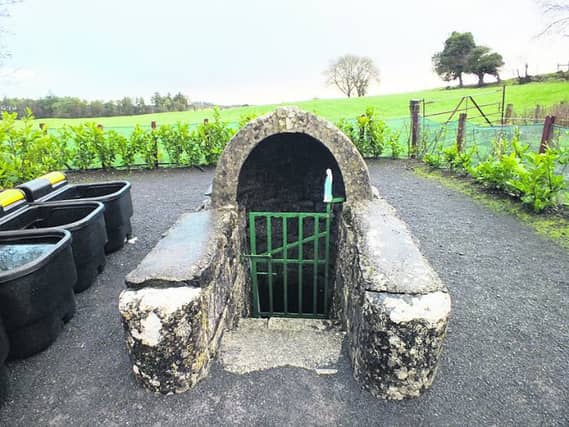

January is not a month you would normally associate with pilgrimage – but each year the people of East Galway make a most unique journey to St Dominic’s Holy Well to prepare for the agricultural year ahead.
The well is located in the townland of Esker a short distance from Athenry – and unlike the majority of holy wells, St Dominic’s is not associated with healing or penance.
BY DR LOUISE NUGENT
The pilgrims do not come to say prayers or to leave offerings; they come to collect the holy water from the well which they take home to bless their fields, farmyards, homes and animals.
The water is taken because it is believed to have special powers of protection and healing through its connection with the saint.
Little is known about the history of this holy well. Some believe that the well came into existence following the arrival of the Dominicans, who came to Esker after the destruction of their priory at Athenry in 1652 by Cromwellian soldiers.
Keeping a low profile and at great personal risk they continued to minister to the local people of the area. Following the relaxing of the penal laws, they built a monastery a short distance from the holy well.
The monks were gifted of 150 acres of land, by a local landlord called Daly from Dunsandle, to help support them and their charitable works. The Dominicans remained at Esker until 1896 when the monastery passed to the Diocese.
In 1903 the Redemptorist Order took over control of the monastery and by this time the modern traditions of the well were firmly established. Through the years the Redemptorists have continued to support the well as the Dominicans did before them, and today they still providing blessings of its waters.
The traditional time for visiting St Dominic’s well is from midday on January 5 until midnight on January 6.
On the morning of January 5, troughs are placed beside the well and filled with water taken from the well.
On both pilgrimage days a mass is held at the church in the Redemptorist monastery, and this is followed by a procession from the monastery to the holy well.
A number of short prayers are said and the well and its waters of the well are blessed by the priest. This year the blessing was performed by Fr Seamus Devitt, and afterwards pilgrims fill plastic bottles and containers from the troughs surrounding the well.
On returning home, the water is sprinkled in the farmyard, the fields, just as Easter water was and is still in some places spread on the fields on May’s eve. The water is also sprinkled on farm machinery, cars, out buildings and homes.
The remainder of water is kept throughout the year and used for sick animals and for cows and sheep during calving and lambing.
A number of people told me of what they believed were cures of animals due to these holy waters. Others sprinkled the water again during the planting and harvesting of crops.
For generations the agricultural year of farmers in East Galway has begun with a visit to St Dominic’s holy well - and it’s wonderful to this the tradition continuing into the 21st century.
Dr Louise Nugent is an archaeologist specialising in medieval pilgrimage and author of blog Pilgrimage in Medieval Ireland (http://pilgrimagemedievalireland.com)