

An Coimisúin Pleanála gives Hayden’s Hotel in Ballinasloe green light to accommodate asylum seekers

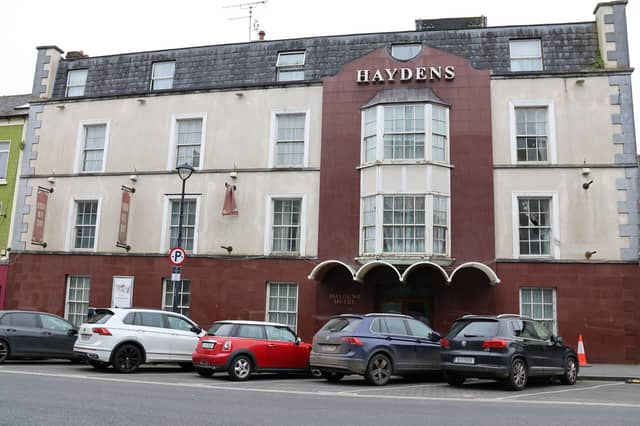

Changes to Hayden’s Hotel in Ballinasloe – including the addition of nine bedrooms – to accommodate asylum seekers do not require planning permission, it was confirmed this week.
An Coimisúin Pleanála has ruled that the change of use of the hotel on Dunlo Street, Ballinasloe to provide accommodation for people seeking international protection is ‘exempted development’, which means it does not require planning permission.
The landmark hotel in the centre of the town, which has been closed for some years, was sold in 2022.
It featured on RTÉ’s At Your Service makeover show with John and Francis Brennan in 2013 when the Creaven brothers owned it.
The new owners Claddagh Ventures Limited, requested a declaration from Galway County Council on whether works associated with transforming the hotel into accommodation for migrants constituted development and whether that development was exempted.
The local authority confirmed the work involved was development and not exempted development, meaning it should go through the normal planning process.
However, following a review, the planning appeals board ruled that it is development but that it qualifies as exempted development.
According to an Inspector’s Report by the ACP, the County Council argued that in its current state, “the hotel would not be suitable to accommodate or support displaced persons seeking international protection”.
Planners in the Council said that the addition of nine bedrooms and five windows on the ground floor, “along with the extensive refurbishment works necessary to make the hotel habitable,” will require planning permission.
Claddagh Ventures Limited subsequently withdrew plans for five windows on the ground floor, and argued that the addition of nine bedrooms involved “minor internal reconfigurations” and was exempted development.
The company argued that adding nine extra bedrooms represented a 17% increase in beds at the 53-bedroom hotel. It said this could not be considered an intensification of use.
As well as changes to facilitate nine extra bedrooms, the planned development includes the removal and demolition of existing internal walls, blocking up of existing internal opes, removal of existing internal staircase, installation of new staircase, and refurbishment of existing toilet blocks.
The plans also include alterations to internal floor plans to provide for amenity and dining areas, playrooms, installation of shower blocks, and toilet block and landscaping of external courtyard.
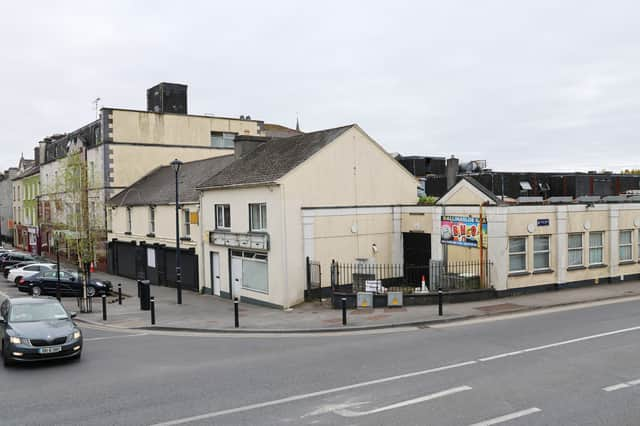
The proposal also involves an alteration to the external elevation by replacing an existing door opening with a window on the rear elevation of the hotel facing onto Jubilee Street.
This latter change, “would not materially affect the external appearance of the structure so as to render the appearance inconsistent with the character of the structure or of neighbouring structures”, according to the Inspector’s Report.
In its ruling, An Coimisúin Pleanála referenced three similar cases in Dublin, Cavan and Limerick where changes to hotels of similar size to Hayden’s were deemed exempted development.
The Inspector’s Report also relied on national legislation, regulations and court cases in reaching the conclusion that the works were exempted development.
A preliminary environmental assessment found that more extensive environmental screening was not required at that site and that the change would comply with the Water Framework Directive, posing “no conceivable risk” to water surface or groundwater bodies including local rivers.
An Coimisúin Pleanála ruled: “that the change of use of a hotel at Dunlo Street, Townparks, Ballinasloe, County Galway, to provide accommodation for persons seeking international protection and associated internal and external works is development and is exempted development.”