

Growing a food business with love – from Galway to the Gambia

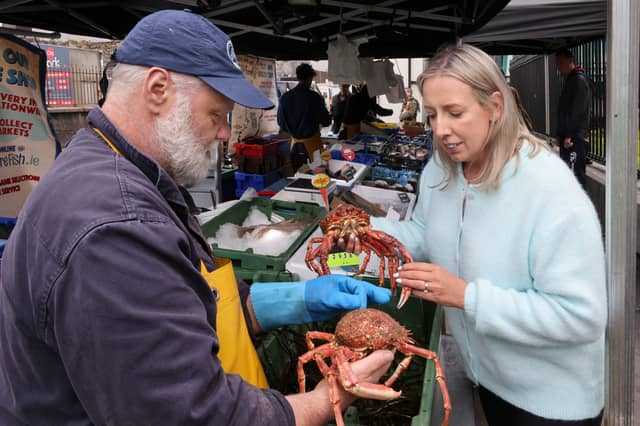

Grainne Carberry is a perfect example of why you should always follow your heart when it comes to your career. The Sligo woman is director of food services at FoodSpace, an onsite catering company she co-founded 10 years ago that specialises in workplace catering and hospitality.
Sitting in the lounge of the city's Hardiman Hotel on a Saturday morning, her enthusiasm is infectious as she outlines an approach which involves seasonal produce, low-waste kitchens and a focus on nutrition.
“We had a farm. We grew up with food and you didn’t waste food,” says Grainne who knew the labour involved in producing the beef, dairy and vegetables they consumed.
That’s an ethos she has she has cultivated in FoodSpace, working hand in glove with co-founder and culinary director Conor Spacey to provide meals for organisations from the University of Galway to eBay.
Now living in Doughiska on the east side of Galway City, Grainne studied Languages and Marketing in Sligo IT after leaving school.
She got “a great job with a local politician” when she graduated, but her real passion lay elsewhere.
“Every evening I’d go to the Tower Hotel, where I had friends working and work for free,” she recalls, laughing.
Weekends too, serving in the restaurant and bar, until the general manager there persuaded her to take a trainee management development programme with Fáilte Ireland. This work experience-based course brought her to GMIT for her final year in the early 2000s.
In Galway, she gained valuable experience in the four-star Park House, going on to work with other companies after graduating, before the travel bug brought her “to places with culture and food”, including Vietnam and Cambodia, then on to Australia and New Zealand.
Back home, she ended up working with Master Chefs Hospitality, the company set up by Kerryman Pat O’Sullivan, which catered for the 2012 Volvo Ocean Race in Galway and for Michael Flatley’s wedding. She worked in NUIG where he’d got the contract for the restaurant and cafés. “That was my first big experience in corporate catering,” Grainne says, and it was a happy time.
“But I wanted more.”
She moved to Dublin and worked “for a big corporate catering company, where my love for food diminished”.
She hated the ethos and pressurised atmosphere, and when the Department of Finance hired her on a three-year contract to oversee the food and beverage programme at Leinster House, she moved there happily and enjoyed it.
Then she met Ronan, whom she married. They travelled, honeymooned in Antarctica and she took time out as they relocated to Galway. The couple have a five-year-old daughter, Holly, who was born in East Jerusalem, where they lived when Ronan was on duty with the UN.
More than a decade ago, Grainne and Conor were hired by German group Bilfinger, to improve catering at a medical devices company in Donegal, moving away from convenience food.
That project went so well, they were tasked with building a dedicated company for workplace catering and "that’s where FoodSpace was born," Gráinne explains of the group which employs 250 people and is headquartered in Dublin with offices countrywide, including in Galway.
Now owned by Apleona, which is based in Germany, FoodSpace caters for companies in Ireland and the UK and its ethos has always been “local food, local suppliers, local people and local culture", Grainne explains.
“Wherever we are doing business, we pick suppliers who are local. The meat, poultry, bread, all the fresh produce is local. We only use Irish chicken. Local and seasonal is important.”
FoodSpace chefs make meals onsite in each company, in fully equipped kitchens and, for sustainability reasons, avocados and salmon don’t feature on menus, while rapeseed oil is used rather than imported olive oil.
When it comes to chocolate, FoodSpace uses premium Irish brand Bean and Goose, and its coffee comes from a farmers’ co-operative in Brazil, in an arrangement that has increased the growers' incomes and allowed for re-investment. The beans are roasted for FoodSpace by Irish company, Bell Lane.
“You have to make sure your chefs and managers are on the same page,” says Gráinne about the FoodSpace philosophy, as she praises parent company Apleona, which has “given us great autonomy to get the food story out there”.
One story relates to a butcher in Donegal, who was a solo operator before getting a FoodSpace contract. He now employs three fulltime staff and one parttime person.
“It’s bringing it back to the community,” Grainne says.
This focus on local, sustainability and zero-waste means FoodSpace isn’t suitable for every company that needs catering facilities.
“We are looking for partners who value people and food,” Grainne says, citing their ‘root to shoot philosophy’, whereby chefs use carrot leaves to make pesto, something they did long before it became popular.
They run onsite zero-waste programmes, and any food not used goes to biodigesters and is used for landscaping and to grow vegetables.
“We have a couple of sites in the UK and Ireland where we have greenhouses and grow a small amount of fruit and vegetables.”
The company also does consultancy food and beverage work for clients in Europe and works with multi-nationals here, on design and layout for catering and food programmes.
FoodSpace has recently brought its expertise to the Gambia, helping to establish a catering school there.
This came about when Conor met Michael Amos of Waste to Wonder at an Apleona event in London. Waste to Wonder works with companies across Europe, redistributing redundant office furniture and equipment to charities worldwide.
When Conor heard about a project Michael was supporting in the Gambia, he asked: “what can we do?” Now they are involved with a local NGO, building a catering college there.
Grainne, who visited in February, explains that it will have three facets – they will grow food, which will be pickled or fermented, and bottled, and sold as condiments, as well as in an onsite café.
This model should make the school self-sustaining after three years. And there will also be a solar-powered bore well to provide clean water to the wider community.
Grainne is planning to climb Mount Kenya later in the year as a fundraiser for this initiative.
“It’s a way of giving back for us – and it has to be through food. That’s our livelihood.”