

Galway delivery driver mocked in company WhatsApp group loses unfair dismissal claim
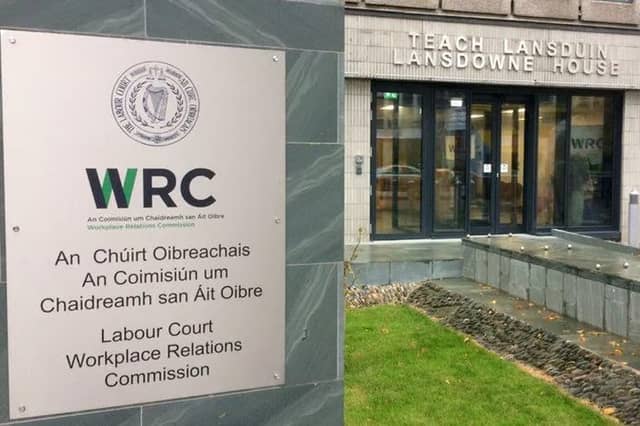

Dainius Masionis claimed he was forced to resign after being demoted, transferred between stores, and mocked in a staff WhatsApp group
A Galway delivery driver who claimed he was forced to resign after being demoted, transferred between stores, and mocked in a staff WhatsApp group has lost a constructive dismissal claim against his former employer.
Dainius Masionis took the action against Clare Distribution Services Limited under the Unfair Dismissals Act, contending that a series of incidents had undermined the relationship of trust and confidence.
The company provides grocery-delivery services to Dunnes Stores, and an adjudication hearing of the Workplace Relations Commission (WRC) was told that Mr Masionis was employed at various times at outlets in Terryland and Knocknacarra.
He worked as a team lead delivery driver from May 2022 until his abrupt resignation in September 2024. He was initially based at the retail chain’s outlet in Knocknacarra before being demoted and transferred to Terryland.
Mr Masionis told the WRC about an incident in August 2023 when he was instructed to attend a customer’s home following an alleged diesel spill from a company vehicle and to present himself as an external contractor.
He stated that he felt this was misleading, compromised his professional integrity, and severely damaged his faith in management.
He also raised concerns over scheduling systems, arguing that drivers were allocated unachievable delivery routes, faced inaccurate time-recording systems, and were regularly unable to take adequate rest breaks.
Matters came to a head in August 2024 when outstanding deliveries were reassigned to another team lead, prompting comments directed at Mr Masionis in a staff WhatsApp group.
Mr Masionis said the comments, posted by a colleague in a group chat accessible to both drivers and managers, were personally critical and left him feeling humiliated and distressed.
He lodged a formal grievance, but said he felt unsafe and was dissatisfied that no apology was forthcoming. He went on certified sick leave before resigning five days after returning to work, arguing that the cumulative effect of the incidents left him with no alternative.
Under cross examination, he accepted that the diesel spill incident had occurred more than a year before his departure and acknowledged that he had not pursued his appeal against the disciplinary outcome before handing in his notice.
The employer denied constructive dismissal and argued that it had acted reasonably at all times. It said Mr Masionis’s grievance concerning the WhatsApp messages had been investigated and upheld in part.
The firm had scheduled three separate disciplinary appeal hearings, but each had been postponed at Mr Masionis’s request due to illness, availability, or witness issues, the WRC heard.
The firm maintained that both the disciplinary appeal and the right to appeal the grievance outcome had remained open, active, and available on the day he resigned.
In her decision, WRC adjudication officer Úna Glazier-Farmer noted that in constructive dismissal claims, the burden of proof rests on the employee to demonstrate that an employer's conduct was so unreasonable that resignation was the only option.
She accepted that Mr Masionis had been genuinely dissatisfied with his transfer from Knocknacarra to Terryland, the disciplinary process, and the handling of the WhatsApp messages.
However, she stressed that a subjective loss of trust and confidence was insufficient on its own to ground a successful claim, and employees were required to exhaust internal grievance procedures before resigning.
Finding that the company had not fundamentally repudiated the employment contract, Ms Glazier-Farmer ruled that Mr Masionis had failed to discharge the burden of proof and decided that he was not unfairly dismissed.