

Galway scientists tackle major hurdle in future diabetes treatment
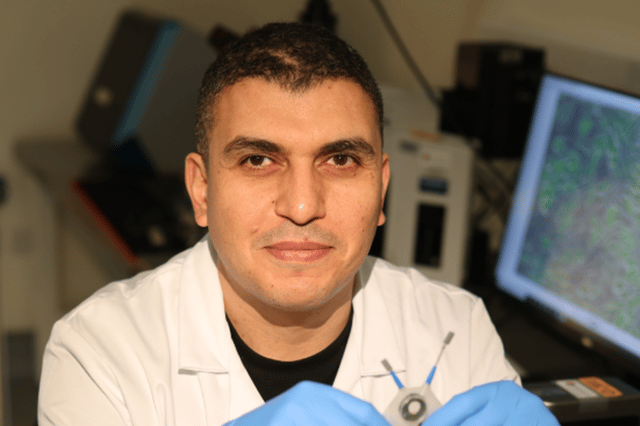

An ordinary courier delivery from Ireland to Italy has produced promising results for University of Galway researchers working to improve future treatments for Type 1 diabetes.
A package containing living cells was sent from Ireland to Italy by ordinary courier. Forty-eight hours later, around 80 per cent were still alive.
For researchers at University of Galway, it was an encouraging result in their efforts to overcome one of the major obstacles to developing new treatments for Type 1 diabetes.
An estimated 31,000 people in Ireland are living with the condition, according to Diabetes Ireland.
Type 1 diabetes develops when the immune system destroys the cells that produce insulin, leaving patients dependent on insulin treatment to regulate their blood sugar levels.
Scientists are exploring whether transplanting healthy insulin-producing cells could one day reduce that dependence. But getting these fragile cells safely from the laboratory to the patient remains a major challenge.
“The obstacle is keeping insulin-producing cells healthy between the lab and the patient,” Professor Abhay Pandit, Director of Rinn Medical Devices at University of Galway, told the Connacht Tribune.
His research team has developed two potential solutions, both of which have produced encouraging results in early testing.
The first is a transport device that supplies cells with oxygen, allowing them to travel without being frozen.
To test the technology, researchers sent laboratory-grown cells from Ireland to Italy using an ordinary courier service.
After 48 hours at room temperature, around 80 per cent of the cells were still alive. Crucially, they went on to form clusters capable of releasing insulin.
Cells that had been frozen and thawed, by contrast, failed to form those clusters.
The findings were supported by separate laboratory tests simulating transport conditions, in which around 91 per cent of cells survived when supplied with oxygen, compared with just 37 per cent without it.
The use of an ordinary courier service could be particularly significant, potentially making the transport of these cells more accessible to hospitals without specialist freezing equipment.
“Because the device travelled by standard courier, in packaging already used in pharmaceutical logistics, it could in future reduce the need for specialist freezing equipment,” Prof Pandit explained.
“That could help hospitals that don’t have it, though we have not yet tested this in those settings.”
The Galway team has also developed a protective gel containing vitamin C, designed to shield cells from damage during handling and storage.
In laboratory tests, cells protected by the gel released around 41 per cent more insulin in response to glucose than those kept in a standard gel.
While the results offer hope for the future of cell-based diabetes treatments, Prof Pandit stressed that both approaches remain at an early stage of development.
However, the research has so far involved laboratory cell lines rather than the human cells that would be needed for transplantation.
Further studies must establish whether the techniques work with human cells and are safe, including whether the vitamin C gel could cause damage under certain conditions.
Prof Pandit cautioned that it was too early to say when patients might benefit.
“Impossible to give a timeline at this stage,” he said.
“These technologies don’t treat diabetes by themselves, they are enabling tools that help cell therapies arrive in good condition.”
Whether such therapies could eventually reduce or eliminate the need for insulin injections will depend on the outcome of future clinical trials.
For now, the Galway researchers are tackling a more immediate challenge: keeping the delicate cells alive long enough to reach the patients who may one day need them.
The findings were published in the Journal of Materials Chemistry B and Advanced Functional Materials, with support from Research Ireland and European funding.