

Galway scientist wins €1.96m to grow ‘mini-brains’ to study stroke
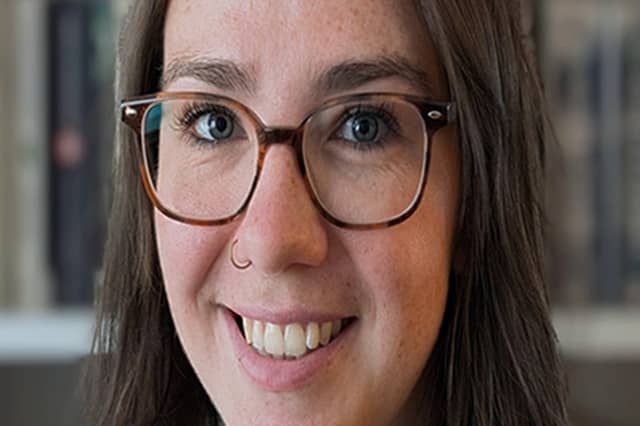

A University of Galway researcher is hoping to unlock better treatments for stroke by growing miniature models of the human brain in a laboratory.
A Galway scientist has secured almost €2 million to grow ‘mini-brains’ in a laboratory in a bid to discover new ways of treating stroke.
Dr Siobhan Crilly will use stem cells to create tiny models of the human brain, complete with blood vessels and simulated blood flow, allowing researchers to study how strokes damage brain cells.
The €1.96 million project could eventually lead to more effective treatments for stroke patients while reducing the need for animal testing.
The research will focus on haemorrhagic stroke, which occurs when bleeding in or around the brain damages surrounding tissue.
Despite being a major cause of death and disability, scientists still have much to learn about exactly how the damage develops and how it might be prevented.
Dr Crilly, a postdoctoral researcher at University of Galway, believes the lab-grown models could help answer those questions.
“With new techniques we can add blood vessels and even simulate blood flow through these mini-brains, allowing us to study stroke in a much more realistic way,” she said.
The miniature models, known as cerebral organoids, are grown from stem cells and mimic some of the structure and function of the human brain.
They could give scientists a new way to investigate what happens during a stroke and test potential treatments before they reach patients.
“This exciting research opens the door to understanding how stroke and other blood vessel-related brain conditions develop, how they damage brain cells, and how we might stop or even reverse that damage, perhaps better than the animal models can,” Dr Crilly said.
The research will be carried out at University of Galway's Institute for Health Discovery and Innovation, building on earlier work at Rinn Medical Devices.
Dr Crilly secured the funding through the Royal Society–Research Ireland University Research Fellowship programme, which supports promising scientists in the early stages of their careers.
Professor Derek Morris, Head of the university's School of Biological and Chemical Sciences, welcomed the award.
“This award recognises her outstanding achievements and her potential to become a future leader in the field,” he said.