

Fears for Galway Bay wildlife as MEPs opt to alter EU nature laws
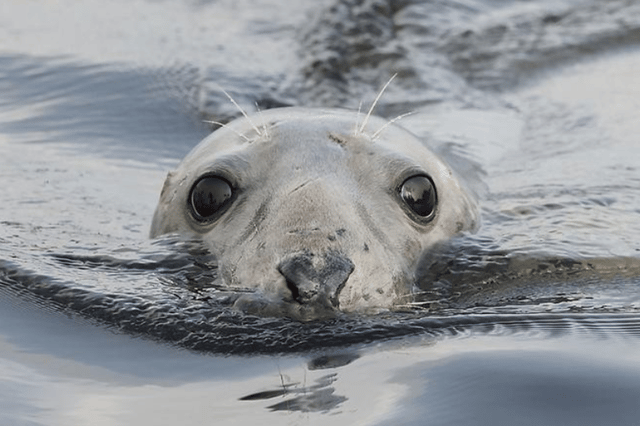

Harbour seals, otters and 20 species of birds in Galway Bay are among the wildlife whose legal protections conservationists fear could be weakened following a European Parliament vote in Strasbourg on Wednesday.
Fine Gael’s Nina Carberry and Independent Ireland’s Ciaran Mullooly backed a controversial amendment to reopen the EU’s Birds and Habitats Directives, the cornerstone of European nature protection legislation. The amendment passed by 357 votes to 284, with 21 abstentions.
“Galway has a huge number of important habitats which have legal protection under these laws which could now be stripped away,” Grace Carr, Marine Advocacy Officer with the Irish Wildlife Trust, told the Galway City Tribune.
The Galway Bay Complex is designated as a Special Area of Conservation for harbour seals, otters and 15 habitat types, including coastal lagoons, reefs, tidal mudflats and salt marshes.
Inner Galway Bay is separately designated as a Special Protection Area for birds including curlew, lapwing, light-bellied Brent geese, grey heron and common terns.
While existing protections remain in place, Amendment 103, if adopted, would require the European Commission to review both directives and propose revisions within 12 months of the new regulation coming into force.
The trust also fears changes to the circumstances in which killing or disturbing protected species during development works would be legally considered deliberate.
Ms Carr, who lobbied Irish MEPs in Brussels last week, criticised the European People’s Party (EPP), to which Fine Gael’s MEPs belong, for siding with far-right MEPs.
Speaking ahead of the vote, she challenged the argument that environmental protection was an obstacle to economic competitiveness.
“They believe that we must reduce the few protections we currently have if we want to fast track infrastructure and industry,” she said.
The trust pointed to a 2024 European Commission study which identified shortages of expertise, staff and resources among the most common reasons for delays in environmental assessments.
The wider proposals passed by 367 votes to 268, with 25 abstentions. Of Ireland’s 14 MEPs, four voted in favour, eight against and two did not participate.
Ms Carberry and Mr Mullooly supported the overall proposal, while Fianna Fáil’s Barry Cowen and Independent MEP Luke ‘Ming’ Flanagan voted against.
Fine Gael MEP Maria Walsh’s office confirmed that she did not participate as she is on maternity leave.
Responding to the Galway City Tribune, Ms Carberry stressed that existing environmental safeguards remained in place and said the legislation was aimed at simplifying planning procedures for new homes, energy and water projects.
“We need to cut red tape and reduce delays to vital projects, while ensuring our environmental protections remain fit for purpose.”
Mr Mullooly said he believed the directives needed to be revised.
“From my perspective, any revision must create legal certainty and relieve administrative burden, while ensuring we protect Ireland’s biodiversity, natural heritage and wildlife,” he said.
Ireland, which currently holds the presidency of the Council of the EU, will play a role in negotiations on the final legislation, which Ms Carr expects to continue into 2027.
The vote comes amid stark evidence of biodiversity loss in Ireland. A 2025 National Parks and Wildlife Service assessment found that 90% of Ireland’s EU-protected habitat types were in unfavourable condition, with 51% showing deteriorating trends.
Ms Carr warned that the consequences of weakening environmental protections extended far beyond wildlife.
“Competitiveness will not matter when devastating floods and fires are increasing, the soil will no longer grow food and every river and water body is polluted,” she said.