

Poor grass growth during summer leads to concerns over winter fodder stocks


FARMERS have been strongly advised by Teagasc to take steps now to ensure that they have sufficient supplies of fodder to see them through the Spring of 2025.
According to a Teagasc grassland specialist, it would be ‘unwise’ for farmers to rely on ‘benevolent spring weather’ – or to assume that feed will be available at an acceptable price next February.
Joe Patton of the Teagasc Animal and Grassland Research and Innovation Programme, said that on average grass growth in 2024 is down by 0.75 to 1.0 tonne DM [dry matter] or two tonnes per acre as compared to the long-term average. Farmers will need no reminding that the cause of the deficit goes back to one word – weather – with our dull and cool summer the reason for the stunted grass growth.
“The drop is mostly due to lower supply of background nitrogen from soil mineralisation, arising from less solar radiation [sunshine] during May, June and July . . .
“The net effect is that more dairy and drystock farmers than usual have reported winter feed budget shortages and a greater risk of feed problems next Spring,” Joe Patton points out in the September edition of the Teagasc Today’s Farm magazine.
He also noted that from previous studies, there would usually be 10% to 15% of dairy and drystock farmers going into the winter season short of feed, with an intention of buying on the open market.
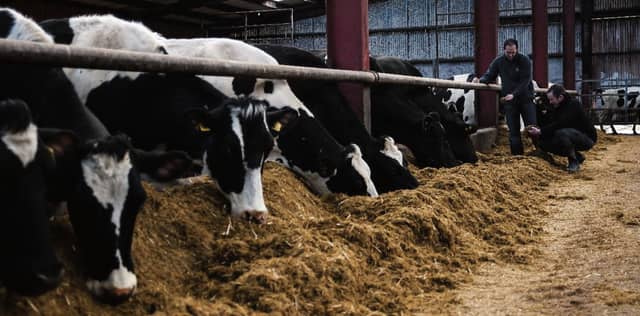
Pictured: Plan now for any forage shortfall.