

County is tougher on dogs than city
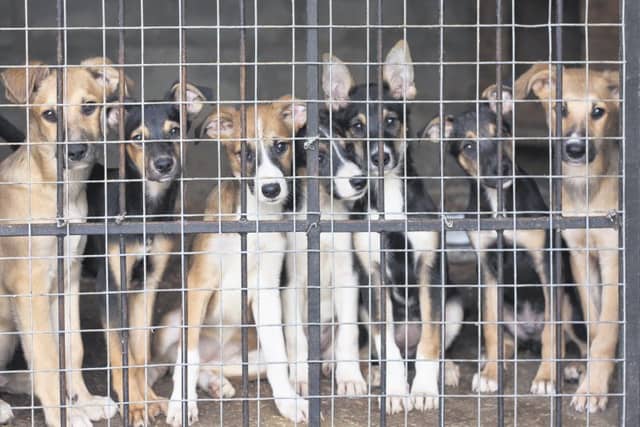

The enforcement of dog control laws has been applied more stringently in the county than the city, according to statistics from the Department of the Environment.
In 2014, a total of 40 fines were issued in the county – with all of them being paid. To contrast this during the same time period no fines were either issued or paid in the city.
Fines are broken up into several categories relating to dog licences, keeping a dog on a lead, dog identification, a dog fouling a public place or finding a stray dog.
These fines vary in amount and non-payment can lead to fines of up to €3,500 and even up to three months in prison.
In 2014, a total of 7,756 individual dog licences were issued in the county area while the city during the same period issued 1,606 licences.
Since the turn of the millennium a total of 112,460 licences have been issued in the county, while the city is just under a fifth of that total in the same time period.
There are currently two full-time dog wardens operating in the county area compared to the one currently working in the city – reflecting the larger population of people and animals to cater for.
On top of this, there are two shelters catering for stray dogs with two vans being operated by the dog wardens.
With the population outside of the city standing at just over 175,000 many of whom have owned pet dogs over the years, the work is certainly cut out for the Dog Wardens plying their trade.
The county is one of only four local authorities to be running a surplus in financing dog controls in the entire country.
Income for the local authority from Dog Controls was sitting at €149,939.00 at the end of 2014, while expenditure was narrowly lower at €149,632.61. This left a small surplus of €306.39.
This is in contrast to Galway City Councils’ dog controls, which are currently running a deficit of over €50,000.
The highest deficit in the country is South Dublin which as of 2014 ran a deficit north of €190,000. While in terms of surpluses Kerry leads the way with a surplus of over €100,000.
Other local authorities running a surplus include Cavan and Kilkenny.
Only 29 canines were put down in dog shelters last year in the County, with 315 animals were transferred to dog welfare groups like Madra.
MADRA, the local charity, saved 474 dogs from being euthanized last year alone, taking in a total of 777 dogs from both pounds and members of the public in the same time period.
“In Galway County, the put-to-sleep rate has been reduced to seven per cent. When we first started working with Galway County Council the figure was at 83%,” said MADRA Chairperson, Edel Comerford.