

Basic steps to ensure that your child stays safe online

By SERGEANT MICHAEL WALSH
THESE uncertain times have led to an understandable disruption to family life, and as we all look out for the most vulnerable, we must not forget our children. With children spending more time than usual at home they are probably spending more time online.
Like us all, children are missing their friends and are perhaps turning to social media and other online platforms to bridge the disconnect in their lives. But how safe is your child online?
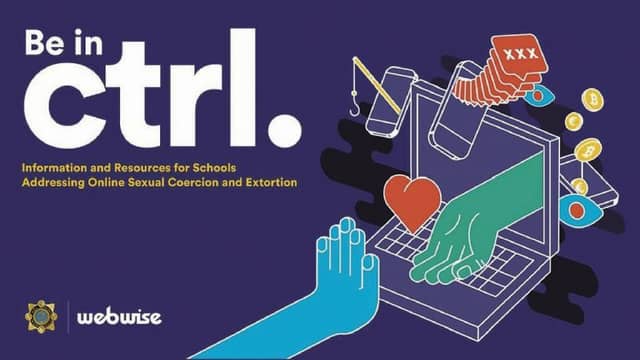
We have all heard on the dangers associated with the internet for children – be it cyberbullying, child grooming or even blackmail and sextortion.
The internet is here to stay, and with increased broadband speeds and 5G networks we’re going to have to learn cyber safety.
As a concerned parent, I recently spoke with Detective Sergeant Lisa Clarke of the Garda Protected Services Bureau and asked her how prevalent these types of crimes really are, and what advice she would give a parent.
Detective Sergeant Clarke agrees that the internet is a scary place for parents, stating that many parents have no idea what their kids are doing or who they’re meeting online.
She said kids are ‘too trusting’ and easily make friends with strangers online. While many of these strangers are other kids who pose no threat, we all know that predators troll the internet under false names and profiles.
Most of these connections are through social media sites but Sgt. Clarke said some connections are also orchestrated through gaming sites.
Another worrying trend highlighted by Detective Sergeant Clarke was the sharing of personal images by teenagers.
Many start out sending innocent photos or videos of themselves to friends, but as the online relationship develops these can sometimes develop into nude or semi-nude images.
As we all know, digital images can be re-shared, and it’s usually after such an image is shared multiple times, before it’s discovered by a third-party parent on their child’s phone.
The issue of the photo going viral is not the only problem said Detective Sergeant Clarke. Under the Child Trafficking and Pornography Act, 1998, it is a serious offence to “knowingly produce, distribute, print or publish any child pornography” and this is in effect what the child is doing. She said ‘kids often have no value in themselves, and see no harm in sharing such imagery’.
Education is key, and it’s never too early to think about your child’s online safety. For parents of young children, it’s important that there is very close supervision of their online activity, and that they are only online when you are with them.
For more, read this week’s Connacht Tribune.
Get the Connacht Tribune Live app
The Connacht Tribune Live app is the home of everything that is happening in Galway City and county. It’s completely FREE and features all the latest news, sport and information on what’s on in your area. Click HERE to download it for iPhone and iPad from Apple’s App Store, or HERE to get the Android Version from Google Play.