

Night owl JJ holds key to successful sleeping

Date Published: 11-Apr-2013
Giving someone back a regular night’s sleep is one of the most satisfying things you can do in medicine, exclaims the man who was key to setting up Galway’s two sleep disorder clinics.
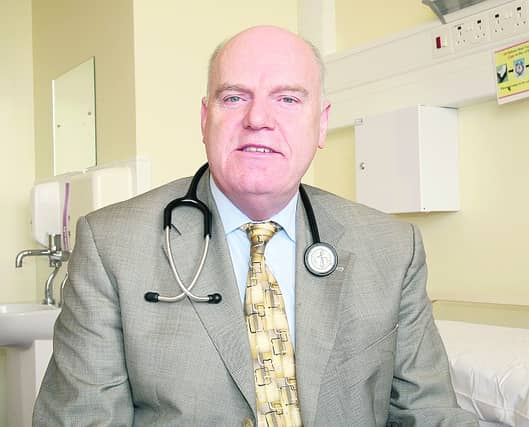
Professor JJ Gilmartin has dedicated most of his professional career to treating sleep disorders, which have become the bane of a growing number of people’s lives.
Sleep apnoea affects 5% of the population; restless leg syndrome is a complaint suffered by up to 10%. One study claims insomnia is suffered by 13% of the populace.
“It’s like St Paul falling off the horse on the road to Damascus. I’ve seen people transformed,” explains the consultant respiratory physician.“There’s a dramatic difference. After a full night’s sleep they’ll go, wow. That’s how it should feel.”
People come to the sleep clinic with two main complaints – loud snoring and excessive daytime sleepiness.
Half of all 50-year-old men snore loudly enough to adversely affect their bed partner, the medic reveals. As you go into a deeper sleep, the muscles in the roof of your mouth or palate, tongue and throat relax. The tissues in your throat can relax enough that they partially block your airway and vibrate. And, the more narrowed your airway, the more force needed to breathe. This causes tissue vibration to increase, which causes snoring to grow louder.
Snoring is affected by the anatomy of the mouth, alcohol consumption, nasal problems and sleep apnoea. Sleep apnoea is caused by throat tissues partially or completely blocking the airway, preventing breathing.
“So these patients literally choke. This might happen as often as 60 times per hour. The sleep pattern is completely disrupted and you wake up feeling wrecked, unrefreshed, like a bear with a sore head. They may have headaches. These people feel horrendous. Their day time function is very, very poor, they’re a risk to others at work or on the road, they’re cranky and often they don’t identify where the problem is coming from.”
Patients can easily assess their risk of having sleep apnoea, by answering four questions phrased around the acronym STOP:
Snoring – does it affect others; Tiredness – is it excessive during the day; Observed apnoea – does your partner report you stop breathing in your sleep; Pressure – is blood pressure high.
If the patient answers yes to at least two of those questions they may have the potentially life threatening condition, which puts them at high risk of heart attack, stroke and diabetes.
All patients are advised that losing weight, becoming fitter and cutting down on alcohol may all help improve their sleeping patterns.
The more serious cases get sent forward to the sleep clinic by a GP where they may undergo an overnight sleep study. This may concentrate on breathing pattern alone or could involve a polysomnogram, which measures brain activity as well.
“You see some interesting things on the sleep study. They are tossing and turning. Sometimes they sit up at the side of the bed and attempt to read a book in their sleep.”
There are a range of possible treatments for snoring or sleep apnoea. These include a gum shield to change the jaw shape, an operation to remove nasal polyps or swellings, laser surgery to remove tissue at the back of the throat.
Professor Gilmartin used to recommend sewing tennis balls into the back of a t-shirt to encourage the wearer to sleep on their side and discourage sleeping on the back, which can contribute to problem snoring. Nowadays a foam vest can be bought for around €120 performs the same function.
For more, read this week's Galway City Tribune.