

Young cancer patients’ own space in University Hospital Galway
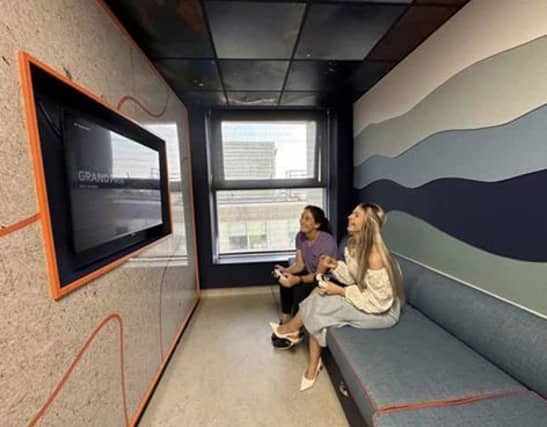

Teenagers and young adult cancer patients in UHG now have a dedicated space to chill and ease their woes as they undergo their treatment – thanks to a collaboration between the hospital and Childhood Cancer Ireland.
Two in-patient rooms – one haematology, one oncology – have been re-imagined as a vibrant hang-out space on the in-patient haematology ward and a two-chaired out-patient area.
UHG oncology patient Daniela Micule outlined what the new spaces mean to young patients.
“I was diagnosed with cancer in March 2025, when I was 17 and in fifth year,” she said.
“Treatment was really hard. They have to fight the cancer aggressively, so I was very sick and in hospital for months at a time.
“It was lonely, even though I had my Mum with me all the time. It was hard for her and the rest of my family too as we couldn’t all be together.
“When you have visitors, you don’t want to be sitting in your hospital room, it can make people feel awkward.
“So I’d come down to the hangout area when I had visitors, and we could play PlayStation or watch TV.
“It always made me feel better to get out of my room, but at the same time I couldn’t go outside because of the risk of getting sick, so having another space is great” she added.
Galway hosts one of three Adolescent and Young Adult (AYA) Centres of Excellence around the country – because it treats both paediatric and adult cancer patients.
And while those patients aged from 16 to 24 fall within the adult patient population, the National Cancer Strategy recognised that their unique needs require a different approach in treatment and care to that of either children or adults.
When you have visitors, you don’t want to be sitting in your hospital room, it can make people feel awkward
Thus, these dedicated AYA therapeutic spaces are vital within an adult cancer service, according to Patricia Gleeson, AYA Clinical Nurse Specialist at Galway University Hospitals.
“A cancer diagnosis during the formative adolescent and young adult years disrupts education, social development, and burgeoning independence,” she said.
“Traditional hospital environments are not always designed to cater to this specific age group, often leaving them feeling isolated and out of place.
“As healthcare professionals, we understand that healing extends far beyond medical treatment. Creating an environment that supports the unique developmental, social, and emotional needs of our young adult patients is paramount,” she added.
An average of 375 children, adolescents and young adults are diagnosed with cancer every year in Ireland. Of this number, 183 are aged between 16 and 24, according to the National Cancer Registry Ireland.
Childhood Cancer Ireland provides emotional, practical and financial supports to help all family members from the moment of diagnosis, through treatment and recovery and into survivorship or bereavement.
Childhood Cancer Ireland CEO Laura Cullinan said the national charity has been refurbishing in-patient and treatment rooms in the paediatric wards of regional hospitals for many years and identified a gap in the provision of spaces for AYA patients.
“Childhood Cancer Ireland is a national charity solely dedicated to supporting children and young people with cancer, survivors and their families, throughout their cancer experience,” she said.
“We have worked in partnership with Galway University Hospitals to ensure that young cancer patients have access to age-appropriate spaces.
"These include vibrant wall art, as well as gaming devices and smart TVs – providing vital distractions, opportunities for peer connection, and a much-needed sense of normality during an incredibly challenging time.
“This work has been possible because of generous support from engineering solutions company Applied Materials and the James Gill Fund. James sadly passed away in 2013 but his legacy lives on in projects like this one.”
James, from Ballinteer in Dublin, was just 17 when he fell ill with flu-like symptoms in 2010. He was later diagnosed with Fibrolamellar Hepatocellular Carcinoma, a rare form of liver cancer that typically affects young adolescents.
We have worked in partnership with Galway University Hospitals to ensure that young cancer patients have access to age-appropriate spaces.
He underwent extensive treatment and in 2012 he was deemed suitable for potentially lifesaving, pioneering treatment in the US – but his condition deteriorated while the paperwork for the trip was being finalised and he passed away in May 2013.
Throughout his illness, James had repeatedly told his family of the need for a dedicated room in hospital for teenagers and young adults who wanted a break from the wards.
Following his death, his devastated parents Declan and Geraldine decided to put his plan into action, and they had continued to work on upgrading communal spaces in adult hospitals and buying essential equipment, before trusting Childhood Cancer Ireland with the remaining Fund in 2024.
And throughout all of this – in Galway and at the both of the other centres – the voices of young people have been at the heart of this project since the beginning, with patients providing valuable feedback and sharing their insights on what would make a difference to their hospital experience.
Galway interior designer Michelle Nally and artist Finbar McHugh were commissioned to collaborate on the UHG project.
Chris Kane, Hospital Manager, Galway University Hospitals said that Childhood Cancer Ireland's support had provided what she called ‘a crucial bridge between paediatric and adult cancer care, offering an age-appropriate sanctuary where our young patients can feel seen, heard, and supported’.
“These spaces allow young people to engage with their interests, maintain social connections, and momentarily escape the realities of their treatment,” she said.
“The vibrant décor, thoughtful design and dedicated amenities - all informed by the patients themselves - have fostered an environment that promotes psychological wellbeing, reduces anxiety, and encourages a positive outlook.”