

World of Politics: Taoiseach betrays no signs of quitting just yet
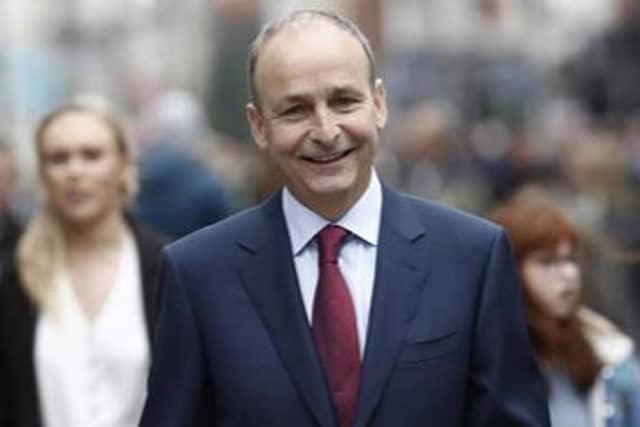

For a brief moment it looked like this might have been Micheál Martin’s Buster Douglas moment – an ironic twist for a man who has been no stranger to the gauntlet during his 15 years as leader of Fianna Fáil.
There have been half a dozen or more including two serious challenges. The first of those was the fallout from the party’s really poor showing in the 2020 general election following poor performances on the hustings by Martin.
The second – and most dangerous – was last autumn when the person he heavily backed as the party’s presidential candidate, Jim Gavin, crashed and burned in the most spectacular way.
And in the past week, more rumblings of a possible heave began to emerge, this time over Martin’s handling of the fuel protests.
Most members of the parliamentary party agreed that the action taken to lift the blockades at the Whitegate refinery, and at the ports of Galway and Foynes, were correct: otherwise the State would have run out of petrol and diesel within days.
However, his own backbenchers took issue with what they claimed was the brusque dismissal of protesters by tone-deaf Government ministers. Those people, they argued, formed the bedrock of support for the Coalition parties in rural Ireland.
And then there came – like a bolt out of the blue – a letter signed by the party’s three youngest TDs which wheeled the scrum.
For 24 hours, it looked like the party’s leadership could turn on an unremarkable event in the grand scheme of things - lingering disaffection over a problem which had been resolved.
So was this a case of the salutary tale of Buster Douglas being evoked?
And then there came – like a bolt out of the blue – a letter signed by the party’s three youngest TDs which wheeled the scrum
Between 1986 and 1990, heavyweight boxer Mike Tyson was the undisputed heavyweight champion of the world, unbeaten in 37 fights.
A little-known journeyman, Buster Douglas, who had lost as many fights as he had won, was named as his next opponent. So lopsided was the match that Douglas’ odds were put at 42-1. Tyson did not bother training for the fight and spent his time partying and socialising.
During the bout, Tyson floored Douglas but he somehow managed to get back on his feet. And then, like a bolt out of the blue, he struck Tyson with a single lucky punch and knocked him out. His challenge seemed innocuous, but it put an end to Tyson’s reign.
So would Martin be downed by a simple seemingly non-consequential thing?
The ‘rebellion’ had a faltering start. An effort was made on Saturday to gather disaffected party backbenchers in Kilkenny on Sunday afternoon. But it had been organised too hastily and did not happen.
Then a quickly-arranged five-hour meeting of the full parliamentary party meeting on Monday – attended by an estimated 60 people – did hear some criticism but it was muted. The fire seems to have been doused.
The letter signed by the three youngest TDs – James O’Connor of Cork East, Ryan O’Meara of Tipperary North, and Albert Dolan of Galway East – was what stoked up the embers again and fanned the flames.
The three referred to ‘real and deep concern’ with the Government’s response to the fuel protests.
Others then weighed in including former Ceann Comhairle Seán Ó Fearghaíl, Limerick City TD Willie O’Dea, Cork North TD Pádraig O’Sullivan and Senator Anne Rabbitte from Galway. This seemed to go a little beyond the rebels and suggested that discontent was seeping into the middle ground.
The three more senior parliamentarians sought an urgent parliamentary party meeting to discuss the “loss of connectivity” with grassroots supporters.
Martin has faced far more perilous challenges. A senior minister I chatted with said, yes, but there’s also the concept of death by a thousand cuts. There have been a number of mis-steps by Martin in this Coalition’s term including the deal forged with Michael Lowry and his Independents.
While the decision to reduce the number of Special Needs Assistants in some schools wasn’t his, he and his Cabinet colleagues took collective punishment for it at the hands of parents, schools and the Opposition.
“With every mistake, he loses political capital,” the Minister said to me.
But a heave against Martin last week was not realistic.
None of the possible successors – Jim O’Callaghan, Dara Calleary or Darragh O’Brien – is inclined to make a move. It’s a big deal for a party to be getting rid of a sitting Taoiseach who is also party leader; it has never been done.
During a visit to Berlin to meet German chancellor Friedrick Merz on Thursday, Martin was asked if his leadership was under threat.
“My position is not under threat in any shape or form,” he declared.
Is he being a bit blasé? The time will come when he has to step down, or walk the plank. Chances are that it will be something small, seemingly insignificant, but one that will nonetheless fell him.
A Buster Douglas moment.
But it’s not going to happen in 2026, not during Ireland’s EU presidency. It could be that the succession race will start in earnest in early 2027 but Fianna Fáil TDs have learned to their cost in the past that you can never underestimate Martin’s stay-ability.
Fianna Fáil held its annual 1916 commemoration in Arbour Hill last Sunday, where Micheál Martin reminded people that he had a mandate to lead the party into the next election and that he intended to do so.
And I’ve a sneaking suspicion that’s true; that he has no intention of stepping down ahead of the next election. He’s not the party’s second longest serving leader after Eamon de Valera for nothing!
Harry McGee is political correspondent of the Irish Times.