

Revealing reality of family life behind closed doors

Date Published: {J}
What is it that makes Irish people so driven to own their own home? It’s only bricks and mortar at the end of the day and our near neighbours, the French, live their entire self-satisfied lives in rented apartments without feeling a burning want for property ownership beating in their breast.
But this is Ireland where owning a house is a symbol of success – or during the Celtic Tiger era, owning three houses but that’s a different story – and yet, as a wonderfully honest documentary on RTE last week showed, the house can drag you down.
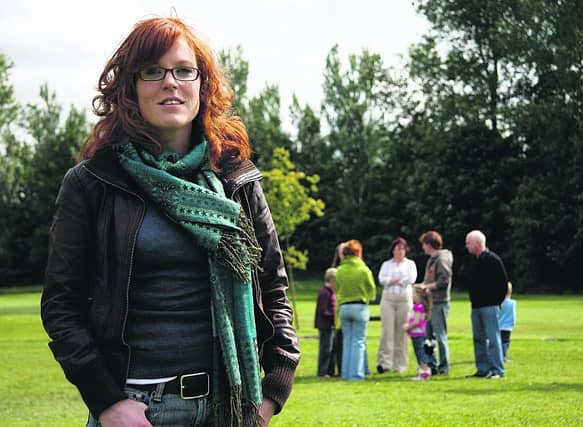
Tayna Doyle is a young film maker who grew up in Clondalkin – literally a stone’s throw from Neilstown where two gangster brothers who murdered in their car two weeks ago – and The House wasn’t just the story of her home; it was the story of her family as well.
And it was so searingly honest and raw – as well as wonderfully produced given that this was her own family she was revealing – that it won an award at the recent New York International Festival of Film and Television.
The backdrop to the story was that the Doyles were finally selling the family home at 20 Harelawn Drive in 2007, eight years after their mother died, more than a decade after their father had finally left home, and 25 years after they’d been relocated there as part of a grand scheme on the part of Dublin Corporation.
As she says at the opening, it was a story of loss, letting go and moving on – but it was also a story of how bad planning wreaks havoc, how alcohol wrecks a home, how fragile family life can be in the face of adversity.
What made this work was the honesty on the part of Tayna Doyle, her father, her sisters Sarah, Tracey, Patrice and brother Peter; they spoke of the tensions caused by drink, the sense of isolation, frustration, abandonment and futility of life on a broken down Corporation estate.
All of this was mixed with old Super 8 footage of an ordinary family growing up, playing in the back garden, burying each other up to their necks in sand in Courttown, eating the Opal fruits their father had brought home as a treat when he got paid on a Friday.
As one of the siblings said, they knew each other, hated each other, wrecked each other’s heads, loved robbing each other’s clothes – but the five kids were always together; just like any other family in any other home.
For more, read this week's Connacht Sentinel.