

World of Politics: Children’s Hospital is a real test of endurance

It was the week when the two-hour barrier for the marathon was finally broken in a real race. If there were an equivalent competition in politics, it would be about sloth—the purgatorial long time it takes for anything to be done in Ireland.
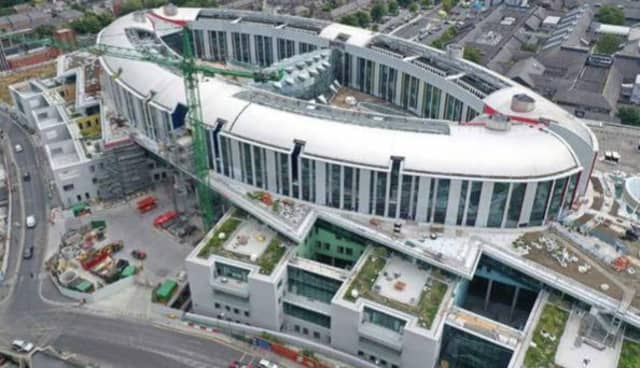
We were met with a raft of headlines over the course of the weekend. The first concerned the National Children’s Hospital.
It said only half the rooms had been completed and, if that’s the case, it’s not going to open in 2026; it might not be open until late 2027, if we’re lucky. Similarly, the new energy interconnector to France has been delayed for two years.
Back in 2016, when Leo Varadkar was Minister for Health, he said the NCH would definitely be finished by the end of that year unless a meteorite hit the Earth. Almost a decade later, we are still waiting.
Look at the Metro: over €300 million has been spent on it and not a spade has gone into the ground. It was first talked about 30 years ago. It’ll be another decade before we see it, because we know it’s not going to go according to plan. By that time, the amount of money spent on it will be so astronomically large we can’t even comprehend it.
Ditto the Galway ring road. And smaller projects, like the Greenway from Dublin to Galway. That stalled years ago and it got as far as Athlone and then disappeared into one of those endless bureaucratic processes.
There’s a mix of people tampering with designs, landowners lodging objections, delays with planning, complications with funding, and local authorities and central government showing little urgency or responsibility to get it done.
It’s not unique to Ireland. Any Irish person who lived in Boston over the last 30 years would have been familiar with the Big Dig—the vast motorway and tunnel project that seemed to go on forever and kept the city locked in gridlock for years.
So why are we in Ireland so beset with delays and overspending on major public projects, including housing? You’d need a PhD in logistics and complex planning to fully explain it, and I certainly don’t have one. But I’ll suggest a few reasons why our projects get mired down for years.
First, the people who conceive these ideas are often the wrong people. They are politicians who think something might be a good idea without fully understanding what it entails.
Our politicians are not very good at long-term planning. Politics is a short and brutal game.
The National Children’s Hospital is a good example. The decision to move the site from the Mater Hospital to St James’s was essentially political, driven by competing agendas—not just among politicians but within the wider medical sphere. Arguably, neither site was ideal; it might have been better located on a greenfield site somewhere near the M50, rather than in a cramped city-centre location.
Secondly, our politicians are not very good at long-term planning. Politics is a short and brutal game. The maximum term of a Dáil is five years, and at the end of it a politician’s job is on the line. Very few think beyond the immediate future. Sometimes a week is a long time in politics.
The profession simply isn’t geared towards long-term planning. Governments produce national development plans and 20-year strategies, but anyone who has ever drawn up a plan knows it’s not worth the paper it’s written on unless it is implemented.
READ MORE: Galway City Council warns councillors it 'may need' supplementary budget to balance books
That is the key, and most politicians are not around long enough to see major projects through, or even shepherd them along.
The planning system is also a factor. There are debates about how influential it is, but it’s clear that the ability of individuals to object to major infrastructure projects has led to significant delays.
It’s also true that when cases go to court, some projects are found to be flawed. That points to another issue: those involved in planning—civil servants, local authorities, and government—don’t always have the expertise - or the fire in the belly - required to deliver them.
Modern projects are extraordinarily complex. The technical requirements are highly specialised, and European regulations mean compliance documents can run to thousands of pages. This does not lend itself to quick decision-making or swift implementation.
Then there’s design tampering. A project may begin as something modest, but then additions and changes are proposed. Each alteration sends it back to the drawing board, increasing complexity, cost, and timelines.
There’s also the practice of lowballing, where an initial bid appears unbeatable, but costs escalate dramatically as the project expands, with more add-ons, and becomes more complex.
Finally, we now live in a far more complicated world than we did 100 years ago. When housing estates were built around Dublin in the 1930s or Galway in the 1960s and 70s, there were far fewer regulations.
Labour and materials were cheaper, and houses could be built quickly. They were simpler structures, few planning regulations, and houses were plain, with fewer features and lower standards than we expect today.
The National Children’s Hospital illustrates this well. It’s not just a building—it’s an intricate system of technology, wiring, safety infrastructure, and sterile environments. It requires extremely advanced and expensive processes to make it world-class. But that does not excuse the fact that the cost and time involved have become almost frightening.
Occasionally, our politicians do get it right. We seem to be better at building motorways. We may not be breaking two-hour records, but at least we’re beginning to post respectable times.
Still, we need more technical expertise (and decision-makers) guiding long-term capital projects.
At the moment, we too often have amateurs with big ambitions but without a clear understanding of how those ambitions will be realised.