

NUIG researchers in genetics breakthrough

An international study, which included researchers from NUI Galway, has identified significant genetic factors that influence the size of structures within the brain.
It is hoped these new insights may help scientists better understand disorders such as schizophrenia, Alzheimer’s disease and epilepsy. The research was published this week in Nature magazine.
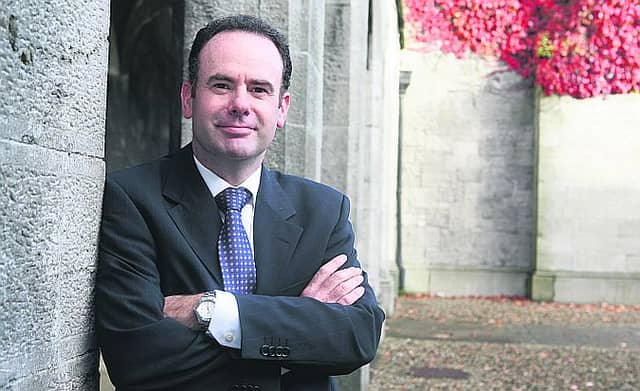
NUI Galway professor of psychology, Professor Gary Donohoe, led the Irish contribution to the study, which involved a consortium of almost 300 scientists from 193 institutes, including NUI Galway.
The consortium, known as the ENIGMA (Enhancing Neuro Imaging Genetics through Meta-Analysis), shared results from analyses of genetic data and MRI scans from more than 30,000 individuals worldwide.
ENGIMA co-founder Professor Paul Thompson from University of Southern California said the scientists screened brain scans and genomes worldwide for factors that help or harm the brain.
“This crowd-sourcing and sheer wealth of data gives us the power to crack the brain’s genetic code,” he explained.
The study looked at the size of sub-cortical brain regions that are involved in some basic functions such as memory, movement, learning and motivation. Abnormalities in these brain regions are associated with neurological and mental health disorders.
“For years, scientists have been fascinated by the development of different brain structures and how this changes in brain-based disorders,” said Professor Donohoe.
“In this study, we have used MRI scans to look at how the size of different brain regions is influenced by our genes and obtained some fascinating results. We have found, for example, one gene variant that affects the size of the Putamen, a region near the centre of the brain which resembles the stone in the middle of a fruit.
“The Putamen is partly responsible for movement and learning, and is implicated in Parkinson’s disease. This finding opens up new avenues for research in this disease by giving new clues about the biological mechanisms involved,” he said.
“Knowledge about the genetic basis of these structures provides important insights into how the brain develops,” said Professor Donohoe.
Dr Sarah Medland of QIMR Berghofer in Australia, was senior-author on the study, and explained that unless you know what ‘normal’ development looks like it’s hard to know how disease manifests in these sub-cortical regions.
“Previously it has been too expensive for any one institute to collect enough scans and genetic data to make this kind of study possible. By working together in large collaborative projects we can tackle these types of problems and further our understanding of the biology of the brain.”