

LIVE: Boston Scientific Galway employees update for Thursday over cybersecurity incident
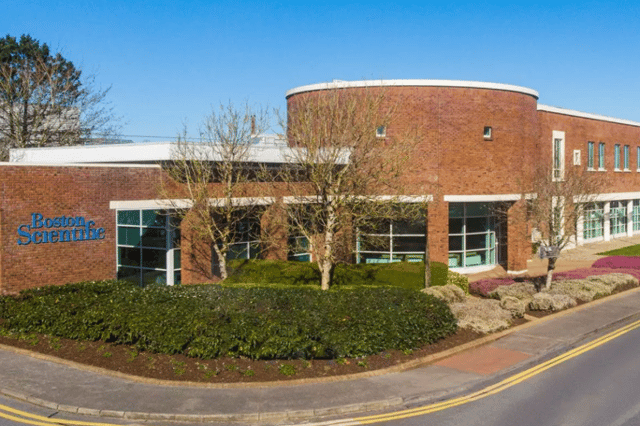

Staff in Galway have been told to work from home for the rest of the day
The medical solutions company Boston Scientific, one of the county’s biggest employers, has said that a cybersecurity incident has hit their global operations including at their office in Galway.
News Agency Company Reuters is reporting that the incident was initially detected on Tuesday and the company had been hoping to have it resolved before start of business today but were unable to do so.
Staff in Galway have been told to work from home for the rest of Wednesday where possible.
No definite plans have been made as yet for employees in regards to work on Thursday with staff to be updated in due course.
Both of Boston’s plants in Cork and Clonmel were also affected by the IT outages for a second day - over 7,000 staff are employed between all three Irish sites with between 3,000-4,000 of these employed in the west.
“Recovery operations will take place in phases, with sites and areas prioritised by business need,” staff were told across the company.
The company founded in Massachusetts in 1979 employs nearly 60,000 people globally.
We will have more on this in our live blog below.
Boston Scientific has a long-established presence in Ireland spanning over 30 years, producing over 30 million devices each year for patients worldwide.
Medical devices exported from Galway include drug-coated devices, vascular balloons and heart and oesophageal stents, treating patients with conditions including heart and vascular disease, oesophageal cancer and those at risk of stroke.
Back in April, it was announced that the company was getting a €75 million investment in its Galway site.
The development, supported by IDA Ireland, includes purpose-built laboratories to enhance the ability of teams in Galway to design, develop and test next-generation medical technologies across a range of cardiovascular therapies.
The expanded capability will support priority programmes across structural heart, cardiovascular and endoscopy, as well as emerging areas such as heart failure and renal denervation technologies, underpinned by a strong regional talent base and STEM ecosystem.