

Healing hands that rebuild lives and give new hope
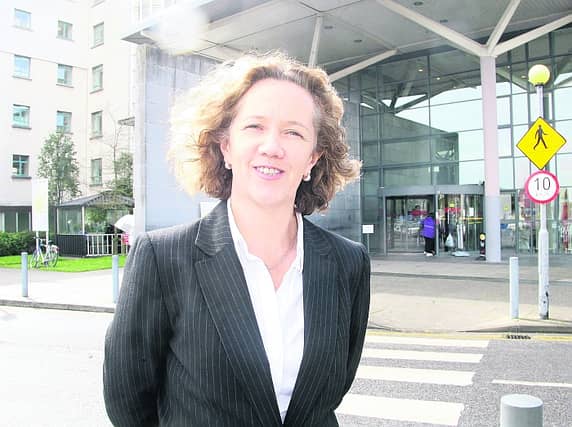

Date Published: {J}
it seems a bit crass to talk about boob jobs with a plastic surgeon who specialises in cancer and trauma patients but Deirdre Jones has heard it all before. After all, she trained and worked in New York where some plastic surgery procedures are almost as routine as going to the dentist.
As one of her specialities, breast reconstruction is likely to feature highly on her surgical list at University Hospital Galway, Portiuncla and Roscommon Hospitals, to which she was appointed in July. So when asked if many women opt to go up or down a few sizes after a mastectomy she reveals that breast reduction is one of the most common requests in a breast reconstruction.
“Certainly people often upsize or downsize. I think it’s perfectly valid.“There are limited instances, because of the size or position of the tumour, where you can give somebody more aesthetically pleasing breasts, particularly in the case of pendulous breasts.
“I think there is a real focus now to get nice cosmetic results,” she adds. “At first the focus was on creating a breast mound to fill out a bra. The gold standard now is to look good naked – that’s the real test.
“People vary highly in how they feel about their breasts. Some people want only a prosthesis in their bra and have had enough of hospitals. Some elderly women can surprise you and want the best reconstruction out there. “The oncological consideration i
s key. It is ideal if you can get a construction that you can actually like, if you can achieve a breast that you like more than the original.”In Galway, breast surgeons perform all the mastectomies as well as most of the reconstructions.
In the Memorial Sloan-Kettering Cancer Center in New York where Deirdre did a microsurgery fellowship, plastic surgeons do all the reconstructions, of which 80% are breast, 10% are in the head and neck, and the rest around the rest of the body.
“When the breast and plastic surgeon work closely together they can agree where the scar will be. Very often you can have an immediate reconstruction on the same day,” she explains.
“In bigger women you have extra abdominal tissue and they may have bigger breasts so if you’re using an abdominal flap you’re not sacrificing any muscles.
“You’re taking the skin and fat and using it to create a breast, so no implant is needed. Six months later you reconstruct a nipple. The other side may or may not need symmetrisation [to make both look the same].”
But Deirdre is keen to point out that not all her work is focused on the mammary glands.
Almost every day surgery is scheduled on what is called nail bed injuries caused by slamming doors, mainly on kids (she recommends parents get the Ikea door stoppers) and flexor tendon injuries caused by knives, lawnmowers and balers.
The volume is hardly surprising when you hear that up to a quarter of patients presenting to the emergency department have upper limb injuries.
She does a lot of work on burn injuries as well as on patients with skin cancer. The incidence of melanoma increased by 92% in the ten years to 2008, according to figures released by the Irish Cancer Society so excising lesions and reconstructing the skin is a routine procedure.
Sometimes she deals with people who have tattoos and piercings that they regret and want removed, but Deirdre explains that the resources and space are frequently not available to carry out these procedures.
“My interest is in reconstruction in trauma and cancer,” she says. “There’s minimal cosmetic practice here [in Galway] it would need to be a fairly extreme case to do a cosmetic procedure.”Plastic surgery was a speciality that excited her from her earliest days as a medical student at UHG.
For more, read this week's Galway City Tribune.