

Galway researchers make global breakthrough in poisonous snake study
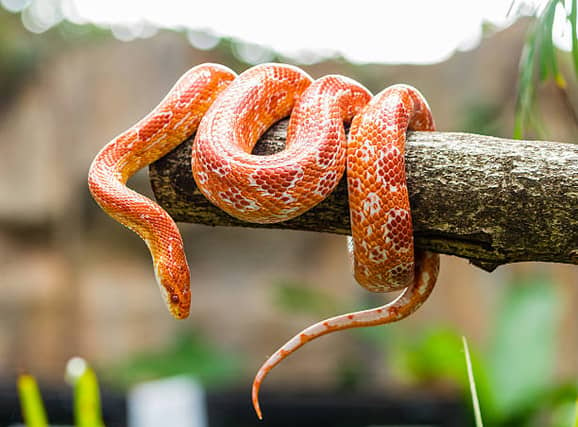

The research examined 458 species across the world, confirming that the presence of venom is tied to visual warning signals evolved to deter potential predators
Snakes that possess venom are significantly more conspicuous against their natural environments than non-venomous species, University of Galway scientists have found, establishing a long-debated link between toxic traits and warning colouration.
The research examined 458 species across the world, confirming that the presence of venom is tied to visual warning signals evolved to deter potential predators – a biological phenomenon known as aposematism.
Conducted by Galway researchers Amy Duclaux, Kevin Healy, and Michel Dugon, the large-scale analysis was supported by Research Ireland and published using data sourced from global citizen science photographs.
The study categorised 353 snake species as venomous and 104 as non-venomous, testing the colour disparity between each reptile and its immediate natural backdrop across eight major snake families.
Researchers found that species displaying higher coverage of red and yellow were significantly more contextually conspicuous, with red colouration showing a direct and significant association with the presence of venom.
Red colour coverage reached as high as 69.5% in Reinhardt’s burrowing snake, while yellow coverage peaked at 46.6% in the yellow-bellied sea snake.
Overall colour disparity varied widely across species, ranging from an almost completely camouflaged score of 0.03 in the nose-horned viper to a highly conspicuous 0.81 in the banded ornate sea snake.
While possessing venom predicted sharper visual contrast in a snake’s natural setting, the researchers found no evidence that this conspicuousness was linked to venom potency or the presence of defensive toxins designed to trigger rapid pain.
The authors noted that previous investigations had failed to confirm a clear group-wide relationship between venom and warning colours because they often relied on museum specimens or scientific illustrations without accounting for environmental backdrops.
To evaluate wild specimens in their natural surroundings, the team extracted five verified live images per species from the iNaturalist platform, excluding individuals found on artificial surfaces such as tarmacadam roads.
The scientists used specialized computer software to separate each snake from its background, measuring colour differences within three-dimensional colour space to quantify how sharply each animal stood out against its habitat.
The authors stated that incorporating environmental context was critical when evaluating how defensive traits shape visual warning cues, recommending that future studies examine specific predator visual systems to better understand the evolutionary pressures driving warning signals in snakes.