

Galway parents demand dyslexia class after 14 denied places

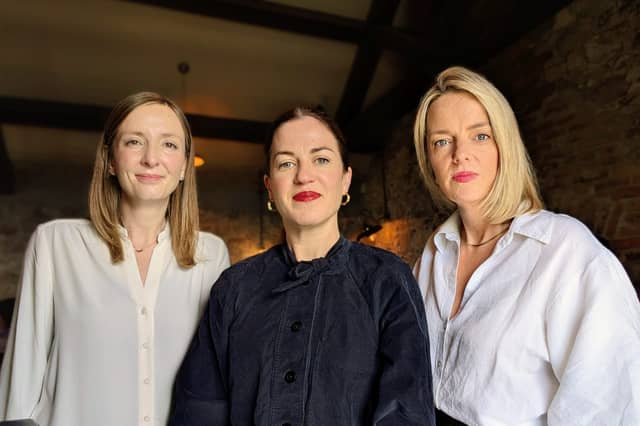

Parents of 14 severely dyslexic Galway pupils say they are being “failed by the system” after their children were left without access to the specialist support offered at Scoil Chatríona Senior in Renmore.
The Galway Dyslexia Parent and Guardian Advocacy Group is now calling on the government to sanction and fund a second SLD/Dyslexia reading class at the school for September 2026, saying their children “cannot wait another year”.
The group says Scoil Chatríona Senior’s specialist reading class has been oversubscribed since it first opened, with demand consistently far exceeding the number of available places.
They point out that for the third consecutive year, applications have run at almost three times capacity. Parents describe this as clear evidence of a sustained need that a single class can no longer meet.
“Scoil Chatríona Senior in Renmore is ready, willing, and fully equipped to open a second class tomorrow,” a spokesperson for the group says.
“The space is there. The resources, policies, expertise and experience are in place. The only thing missing is government sanction.”
Parents argue that pressure on the school’s specialist dyslexia class is unsurprising given it is the only one of its kind in Connacht, serving families from across the region.
For September 2026, six places were available, but 20 children applied, with 14 missing out.
“For us as parents, there is a large disparity across the country, and the level of support and interventions seems hugely unequal,” says Jenny Dagg from Shantalla.
“There is just one reading class in Connacht. These classes have excellent outcomes, and advocating for the right support is hugely challenging for parents. The children left without a place are among the most impacted in the country.”
To qualify, a child must have average or above-average intelligence, have completed second class or be at least eight years old, and be assessed at the first or second percentile for literacy.
“That means they are in the bottom two percent of their peers for reading and writing, while their cognitive ability is entirely in line with, or above, their classmates,” the advocacy group explains.
“These are bright children being held back solely by severe dyslexia. Without intensive specialist intervention, children like these risk leaving sixth class without the literacy skills to write a birthday card or fill in a basic form. That is not a hypothetical. That is what happens when the system fails them.”
Parents say one or two 30-minute weekly learning support sessions cannot compare to the intensive, structured intervention provided in the class, where specialist dyslexia teachers work with pupils in small groups on a nine-to-one ratio over a two-year period.
They argue that mainstream classroom support alone is insufficient for children performing in the first or second percentile for literacy.
The model exists because it has consistently proven effective for children with severe dyslexia.
The school is ready. The need is clear. The children cannot wait another year. Every month of delay is a month stolen from a child’s development. There is no recovering lost time. There is only acting now, or explaining later why you didn’t.”
Among the children left without places is Olivia (8), who has severe dyslexia and dyscalculia and was assessed in the first percentile for literacy.
Despite receiving daily support in school, her family says the current assistance “is not enough” and falls far short of the intervention recommended by experts.
And Jamie (9) was denied a place in the class for a second consecutive year despite a professional assessment recommending the programme.
Meanwhile, Luke (11) has applied for a place three years in a row and is approaching what his family fears may be his final opportunity to access the two-year intervention before leaving primary school.
The Galway Dyslexia Parent and Guardian Advocacy Group says these cases reflect a wider failure to provide adequate specialist supports for children with severe dyslexia in the region.
The group is calling on the government and the National Council for Special Education (NCSE) to sanction and fund a second Reading Class at Scoil Chatríona Senior for September 2026.
“The school is ready,” they say.
“The need is clear. The children cannot wait another year. Every month of delay is a month stolen from a child’s development. There is no recovering lost time. There is only acting now, or explaining later why you didn’t.”
Funded by the Local Democracy Reporting Scheme