

University of Galway sees 114% increase in sexual violence and harassment reports since policy introduction


Reports of sexual violence and harassment at University of Galway have risen 114 per cent since a revised policy was introduced in 2024.
There has been a 114 per cent increase in reports of sexual violence and harassment at the University of Galway since its revised policy was introduced in 2024.
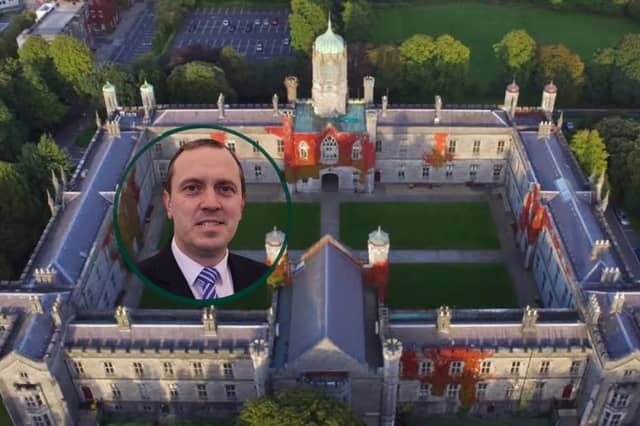
The increase in reporting has prompted Galway West TD John Connolly (FF) to call for more staff and resources for sexual violence and harassment prevention and response.
With students returning to college, Deputy Connolly said it was important to discuss the issue without creating unnecessary fear or concern.
“You don't want to frighten people or give them undue concern, but this is part of college life,” he said.
The figures were outlined to the Oireachtas Joint Committee on Further and Higher Education, Research, Innovation and Science during a discussion on sexual violence and harassment policies and procedures in higher education.
According to the university, increased reporting is a measure of the impact of the policy, and greater awareness of the supports available to students and staff.
University of Galway introduced its revised Sexual Violence and Harassment Policy and Procedure in 2024, with the policy going live in December of that year.
Dr Helen Maher, Vice President for Equality, Diversity and Inclusion at University of Galway, told the committee there had been an increase of 114 per cent in reports since its introduction.
She said measuring the increase was important as it demonstrated both the impact of the university's work and the level of resources required to respond.
"We have a dedicated committee on sexual violence and harassment prevention and response," said Dr Maher.
“The data is collated and annually reported. There has been an increase of 114 per cent in reports since 2024 when the policy was introduced. We also have other instruments to measure, for example, student experience surveys and staff culture surveys."
Dr Maher said the work could not be carried by a single office and required a whole-of-university response.
Sexual Violence and Harassment Prevention and Response Manager at University of Galway, Niamh Kavanagh, said activity in the area had increased by more than 100 per cent since the policy went live.
"We certainly have the data in Galway to support the fact that since we went live with this policy in December 2024, the activity in this area has increased by over 100 per cent," she said.
“That is calculated from our formal reports, our speak-out reports, and the engagement with my office in terms of queries disclosures, etc."
Deputy Connolly said the level of reporting underlined the need to ensure resources were available for those coming forward.
He called for an increase in the number of response managers working in third-level institutions.
"The numbers employed need to be increased,” he said. “They are stretched in what they can do.”
Concerns about staffing levels had also been raised at national level. At an earlier committee hearing, the Teachers’ Union of Ireland said 16 dedicated staff across the higher education sector was “probably not enough”.
You don't want to frighten people or give them undue concern, but this is part of college life,
Rape Crisis Ireland also warned of the risk that response managers could become the people expected to “do everything”, rather than acting as a point of knowledge and co-ordination within an institution.
The pressure on resources was also highlighted by University of Galway.
"There are many challenges," said Ms Kavanagh.
“Where many reports are coming in, the social worker may already be assigned. It is a matter of how many cases people can actually support.
"Resources are a big question. We have conflicts sometimes between GDPR, data protection and confidentiality."
Ms Kavanagh told the committee that a national panel of specialist investigators would make the process easier.
"We have three trauma-informed companies that can conduct investigations, and we are using them off the procurement framework," she explained.
“This is not ideal because it is time-consuming. I would much prefer to have either an in-house investigator to call upon or a national panel of investigators with expertise in this space.
"This would make the process much quicker for all involved."
Deputy Connolly has supported this call.
"We need to look at the feasibility of establishing a shared national investigative resource, panel or specialist unit to support HEIs in conducting investigations, developing policy, sharing expertise and promoting consistency of practice across the sector" concluded Deputy Connolly.
Funded by the Local Democracy Reporting Scheme