

Galway City Council investigating environmental breaches involving Japanese knotweed
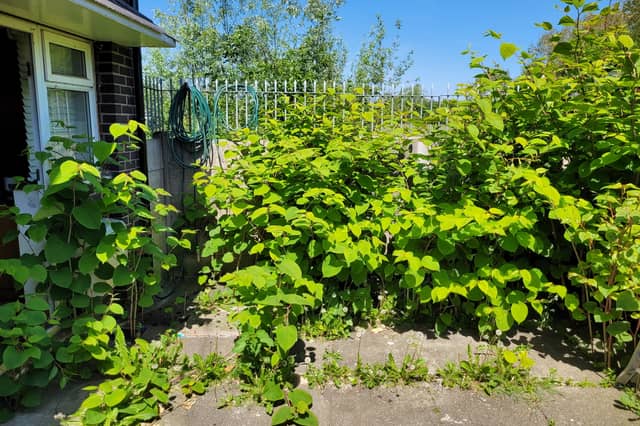

Japanese knotweed is notoriously difficult to eradicate and spreads very easily if it is disturbed
Galway City Council is investigating allegations that groundwork is taking place in violation of environmental laws on a development site near Menlo where invasive Japanese knotweed has been located.
The local authority’s biodiversity officer has been liaising with local residents who raised concerns about the issue in recent weeks, as well as engaging with council’s planning and environmental enforcement teams.
It is understood that the invasive plant had been identified on a site earmarked for the development of large-scale student accommodation off the Coolough Road near Carraig Bán.
Japanese knotweed is notoriously difficult to eradicate and spreads very easily if it is disturbed. It is illegal to cause the plant to be dispersed, and soil contaminated with the plant is classified as controlled waste.
Digging or bulldozing an affected area can cause the plant to spread, as a rhizome the size of a fingernail can generate an entirely new colony.
Asked whether it had received reports that works were being carried out on the site in violation of an enforcement notice concerning Japanese knotweed, a spokeswoman for Galway City Council said it was currently investigating the matter.
“Galway City Council’s biodiversity officer has been liaising with local residents who have contacted the council directly regarding this matter,” she said.
“The biodiversity officer has also been engaging with the council’s planning and environmental enforcement teams.
“The matter is currently being investigated, and an update will be provided in due course,” she added.
The National Invasive Species Database has recorded more than 110 sightings of Japanese knotweed in Galway, ranking the county eighth nationally.
Last year, Galway City Council estimated that it could cost more than €1 million to clear the invasive plant from a housing development site in Doughiska.
European Union regulations make planting, spreading or causing the dispersal of Japanese knotweed a criminal offence. Underground rhizomes have been known to damage the foundations, walls and drains of properties.
Eradicating the plants may involve spraying or injecting herbicides over a period of up to four years, or excavating contaminated soil and burying it in a root-proof membrane at least two metres below the surface.