

Galway businessman's wife felt hospice was 'right place to be' after terminal cancer diagnosis
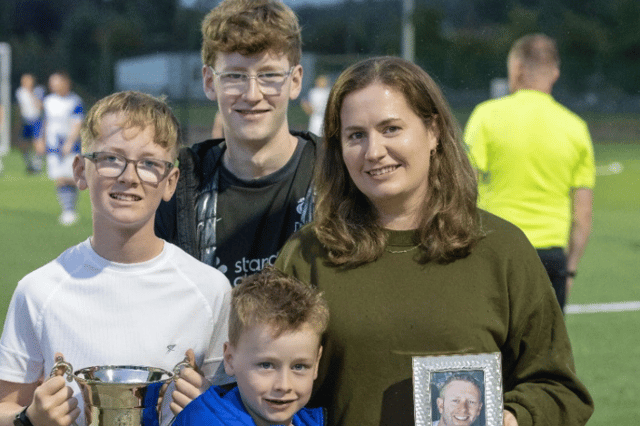

‘It was a really, really special time and not really sad. It wasn’t a sad place for us to be’
The wife of a well known Galway businessman who died in November of last year has praised the Galway Hospice where he spent his final three months.
After James Hastings was diagnosed with stage four cholangiocarcinoma - cancer of the bile duct - he set up the fundraisers ‘James Fights Back’ where he shared regular updates about his treatment while highlighting how rare cancer treatment is dealt with in Ireland.
James - up to then a fit and healthy 41-year-old who was running his own business, Tyre Aware in Ballinderreen, and hugely involved with Kinvara United FC - was living a lovely life with his wife Marian and their three boys, Eoin, Ben and Joey, before his and their world changed.
The couple were childhood sweethearts.
Marian said: “I met James when I was 16, so we were together for a very long time.
“He became ill in 2023. It turned out that he had cholangiocarcinoma, cancer of the bile duct, and we found out it was stage four.
“James was such a determined person. He was so determined to find a cure or at least a way to extend his life. He spent all of his time researching and looking at treatment and things. It was nearly like my job as well. It was a team effort.”
Just five per cent of people with his diagnosis respond to immunotherapy so he paid for private tests overseas to check the DNA of his cancer – and discovered that he fell into this tiny category.
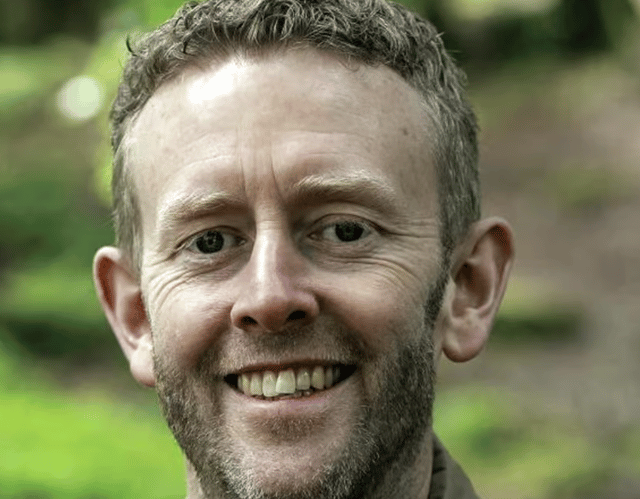
But as a public patient, the HSE would not provide the drug Durvalumab which helps the immune system kill cancer cells and is already used in Irish hospitals to treat lung cancer – because it wasn’t licenced here for his condition.
At the beginning, James felt he would be able to fight this cancer without the use of the hospice.
“‘No, I’m going to get better, I don’t need the hospice’, that’s what he said.”
She continued: “When we were at home and James was quite ill, he had palliative care nurses come out to him.
“They were a real lifeline for us because I felt when they weren’t there that I was in charge of his care, so I was really glad to see them come. I could bring up any issues that I had with them and they were very caring, in an emotional sense as well as a physical one.”
Eventually, James reluctantly agreed to come to the hospice by ambulance and upon landing Marian immediately felt that it was the “right place” for him to be in.
“When I got to the hospice, I came separately to him because I had to drive. James was in bed and the patio doors were open in the room that he was in. The sun was just streaming in and I could see the flowers outside the door. It was just beautiful.
“James was wrapped in blankets and he looked so much more at home than he would have in little hospital sheets. They were proper furry blankets and it looked lovely.
“He said to me, ‘I went for a walk around the grounds’. I didn’t believe him, but then I spoke to one of the nurses later and she said she had brought him for a walk around. He was curious about the place and that helped him with his fears as well. He could see what it was. That really touched me.”
She said the staff in the hospice, who she still keeps in regular contact with, went above and beyond for James and his family in their time there with Marian saying that they made the place “a very special home for us”.
Marian added: “It was a really, really special time and not really sad. It wasn’t a sad place for us to be.
“As he became more ill, they were so dedicated to making him feel better. He was very nauseous and they were determined to get on top of that nausea and pain.
“They were always trying to balance it. He wanted to be awake enough to see the kids and they really respected that.
“That level of care and respect for his wishes was so precious all the way along. There has always been a connection. There’s never been a time where I’ve been out of contact with the hospice really.
“Just that connection, to still have this, is really important to me.”