

Teagasc explores new options for whiskey grain crops and healthier beers

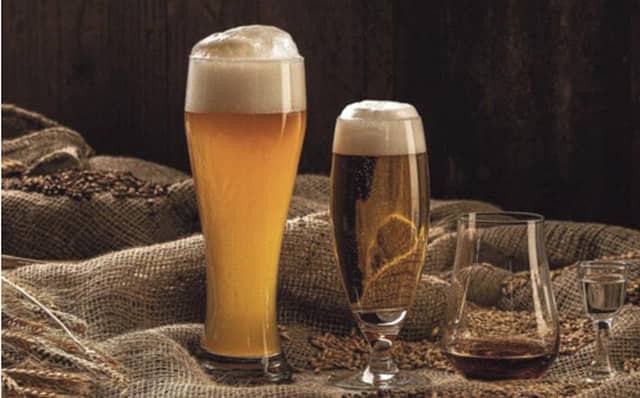

THE lucrative beer and whiskey markets – both domestic and international – are now the focus of Teagasc research in terms of home-grown grain products.
While Irish barley ‘is the backbone’ of Ireland’s brewing and distilling industry, Teagasc researchers are now examining the future potential use of Irish grown wheat maize and rye, to reduce the industry’s reliance on imports.
The Dept. of Agriculture has funded the Teagasc research into expansion of malting barley growth in Ireland in a projected entitled: ‘Distilling and Brewing – Building Capacity’.
According to Richie Hackett, Research Officer, Crop Research Centre, Carlow, Irish grown barley has normally met the demand of the malting sector – with the exception of seasons marked by very bad weather.
He added that one of the key questions in the research was whether Irish grown winter wheat could substitute for the large number of imported maize used in grain whiskey production.
“The project also investigated the potential to grow grain maize domestically and explored the agronomy, [the application of science and technology to the improvement of major food crops], of hybrid rye, a newer crop for Irish farms,” Richie Hackett outlines in the latest edition of the Teagasc TResearch autumn edition.
Some of the main points to emerge from the research were:
■ The development of new soft wheat varieties with improved disease resistance are under development and are expected to become available to Irish growers in the near future.
■ With further ‘breeding research’, earlier maturing varieties of maize [maturing in September], when drying conditions tend to be better in Ireland, could be suitable for the industry.
■ There is the potential for the development of rye grain in Ireland for whiskey production. Beneficial traits of rye are: high yield; good fungal disease resistance; fertiliser use efficiency; and low carbon footprint.
“Overall, the research suggested that with the right applied agronomy [the use of science/technology], both hybrid rye and wheat, hold potential as additional grain options for the brewing and distilling sector,” Richie Hackett noted.
In a separate research carried out by Teagasc researchers, Ana Soriano Lerma, Carlow, and John Kenny, Moorepark, are examining the possibility of developing healthier beers including non-alcoholic options.
The health benefits which can be attached to beers are based on the fact that fermented foods have been shown to reduce disease risk and improve health by enhancing gut microbial diversity and decreasing inflammation, the researchers point out.
One of the research findings is that the fermentation process in beers – traditionally used to transform sugars into ethanol [alcohol] – could also be used as a means to improve ‘the healthiness, flavour, aroma and texture of the final product’.
“So, for anyone who’s looking for their next favourite beer, but who’s also conscious of staying health, the non-alcoholic beers are definitely worth giving a try,” said researcher. Ana Soriano Lerma.
■ ‘To your good health’ [the study on beers] and ‘Growing grain for the glass’ [new grains for whiskey], can be read in full in the autumn edition of the Teagasc TResearch magazine.