

Demand for land in West growing

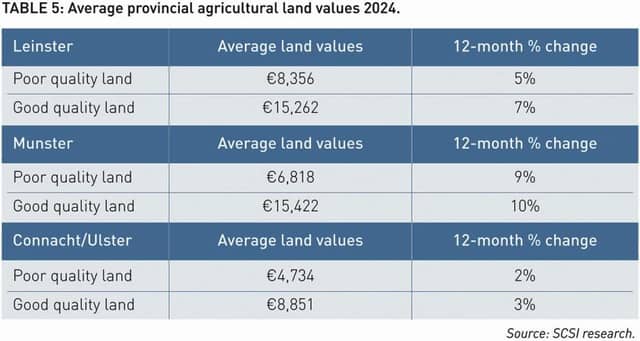

A NATIONAL land survey carried out earlier this year has indicated that the average price paid for an acre of good quality farmland in Galway in 2024 was €10,500.
The survey – undertaken by Teagasc and the Society of Chartered Surveyors Ireland [SCSI] – also predicted an average increase this year in farmland prices of 6%.
A 7% average increase in land rental prices is also predicted in the survey which took place during February/March last, and included 169 auctioneers and valuers from all parts of the country.
The dearest county to buy land in Connacht-Ulster was Donegal – €13,280 for good quality land in ’24 – while the cheapest was Leitrim at €9,000.
According to SCSI auctioneers and valuers, the main ‘drivers’ in the price and demand for farmland are: better milk prices; competition among farmers and investors; and the Nitrates Action Programme [NAP].
Because of the conditions that apply in NAP, some farmers require more land to meet lower stocking rate thresholds, especially in the dairy sector.
Poorer quality farmland being offered for sale in Galway during 2024 averaged out at just under €6,000 an acre – an increase of nearly €700 from the previous year.
Across the Connacht-Ulster region, the cost of renting land increased by around 14% last year – ‘grazing/silage’ land cost on average €208 an acre and ‘grazing/only’ worked out at €177 per acre.
Auctioneer Martin O’Connor of DNG Oughterard, a member of SCSI’s Rural Agency Committee, said that land prices were being driven by a continued low supply of land to the market.[Annually, only 0.5% of farmland comes on the market in Ireland, SCSI state].
“As the market continues to evolve, we believe long-term leasing will remain the preferred model, supported by government policies that encourage security of tenure and investment in land productivity.
“As a result, nearly 84% of survey respondents noted that farmers would typically pay more per acre for similar quality land on a long-term lease as compared to conacre,” said Martin O’Connor.
Pictured: The percentage changes show increases in 2024 as compared to 2023.