

Capturing riches of normal life well-lived

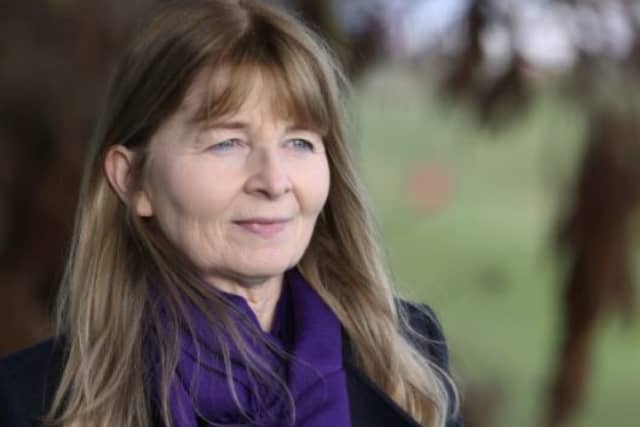

“An intimate portrait of a woman’s life over 25 years,” is how Mary Costello sums up her forthcoming novel, ‘A Beautiful Loan’, which will be published next month.
Ahead of that, Mary will be in Kennys’ Bookshop in Liosbán next Tuesday, March 3, in conversation with Sarah Kenny about this book and her work generally.
“Anna is trying to understand the forces that have shaped her life,” says Mary of the novel's main character. "They are family, love religion and, especially, literature.”Life being what it is, Anna's relationships aren’t straightforward. But everything that happens is part of her journey to becoming conscious, which is “one of the real impulses in her life”.
Originally from the West of Ireland, she moves to Dublin to train as a teacher and, at 19, meets an older man, with whom she becomes enthralled. Peter is sophisticated and well-travelled, and the much-younger Anna is in awe of him.
They marry but it’s complicated.“I think she’s trying to recreate her original family," Mary says. "There was an Eden feel to her childhood and she projects a lot of her father onto Peter.”
Anna had a close relationship with her father, but Peter is different, something she realises increasingly as time passes.
“We all initially project onto someone when we fall in love,” says Mary, who first studied Jungian psychology in her 20s. While projection might be normal, “it’s not fair really and relationships mature when we withdraw those projections”.
In Anna’s case, she realises Peter is not the man she had presumed him to be. Eventually, the marriage ends.
“He becomes colder and distant and controlling to a degree, but at the end of the novel, she feels compassion for him and understanding.”
Anna embarks on a new relationship with a young Algerian, Karim, a Muslim. Having been “Godly when she was young”, shebecomes deeply interested in that religion.
Karim is a beautiful, sensitive soul, a person who shows kindness, consideration and patience, and that's what leads her to study Islam.
In this religion, Anna finds respect and beauty – “not that different to what she’d known as a God-minded child”.
The tenets of all world religions are the same, says Mary, “Love one another and do unto others as you would have them do unto you."The problems arise when dogma and man-made rules get in the way.
Like Anna, Mary had a boyfriend who was Muslim and she studied Islam, gaining "an understanding of its beauty".
“That helped me to write Anna,” says the author, adding that ‘A Beautiful Loan’ (the title comes from the Qur'an) is a work of fiction.
“Like many authors, I draw on aspects of my own life, my reading, my passions". Carl Jung "has been a pivotal influence," she says, praising his "all-encompassing approach to the human psyche", which incorporates science, philosophy, rational and irrational behaviour and all world cultures”. Joyce has long been an influence on Mary and the French-Algerian philosopher and novelist Albert Camus is another hero.
"He was flawed but had such a deep concern for the suffering of others.”
Mary, originally from Menlough, lived in Dublin for many years, settling in Kinvara with her husband Martin 10 years ago, where she continues her own journey of self-discovery.
“Becoming conscious is the most important thing we can do. The more conscious we get, the better it is for us. I write to become conscious.”
But being conscious isn't always easy in a world of algorithms, social media, advertising and constant pressure to conform.
“We are being lulled into unconsciousness on every side,” she says, adding that Jung believed the greatest danger to humanity wasn’t necessarily from empire-building or natural disasters but from individuals losing the ability to become conscious.
In essence, consciousness is about the old-fashioned idea of having a conscience, she says. That means being aware of what Jung termed our 'shadow side', those aspects of our personality that we repress or reject.
“We all have a shadow side, even in a small way,” she says. “And if we don’t deal with the enemy within, we will project it onto others.
"That means accepting that ‘I am a bit selfish’ or ‘I can be nasty sometimes’. You have to acknowledge it, because otherwise you will project it.”
It’s only when we learn to mediate opposites that we stop that behaviour. The problem is that modern life is designed to make us unconscious, she says, quoting economist and former Greek Prime Minister Yanis Varoufakis who has described our era as "techno-feudalism".
In her younger days as a primary teacher, Mary's message to her pupils was “Do as much good as you can, and do no harm”.
That’s the philosophy by which the award-winning writer still lives and creates. Compassion is central to her novels and short stories, and she stresses the importance of having mercy for the powerless, defenceless and voiceless - human and animal.
“It is imperative for us to be their voice.”
Anna’s dog in this novel exemplifies this.
“If I were to put a label on Boo, it would be mercy,” says Mary of the dog, who plays a key role in the story's development.
One of her aims with her books is to encourage people to think.
“I write about what consumes me or distresses me even. I write to become conscious, to know what to think. It’s essential."
She gave up writing in her 20s, in a bid “to be more normal”, but ultimately, she had to return.
She's lucky, she says. "I write in a warm room and there's food in the fridge." However, she hasn't written a word of fiction since Israel's invasion of Gaza in October 2023, having become “absolutely paralysed by the genocide”.
The "shameful behaviour" of western countries hasn't helped.
“I had not expected that the West would tolerate such depravity from Israel. I thought ordinary people would be on the streets," she says.
And while Irish people have been protesting, the country is as complicit as anywhere else, as we’ve let Shannon Airport be used as a “de facto military base. Innocent people in tents in Gaza have been hammered by bombs, have been vaporised so that there isn’t an atom left, and nobody is searching the planes going through Shannon".
Mary doesn't buy into the theory that US companies would abandon Ireland if such searches were to occur.
“They will stay here as long as they are making money.”Humanity is living through bleak and frightening times at present, but Mary thinks that post-World-War II was even more frightening.Nuclear arms had been used for the first time in WW II and these arms were proliferating as the Cold War loomed.
Until then, only God or nature had power to destroy people, she says, “Now man could obliterate humanity.”
She's not sure about the future of humanity - but we need to increase our consciousness pretty rapidly and to be aware of the sufferings of others.
“Everything comes down to mercy and compassion."
Mary will be in conversation next Tuesday, March 3, in Kennys'. The event is free but space is limited. For booking, go to Kennys.ie/events.