

Surreal drama shows death in a new light


Arts Week with Judy Murphy
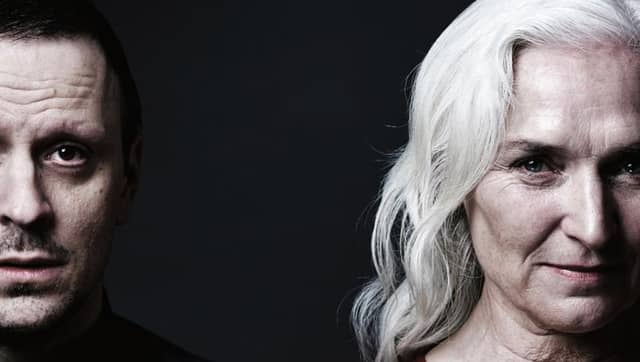
It’s dark and light and quite funny,” says actress Olwen Fouéré about Death at Intervals, which is being staged this month at Galway International Arts Festival.
This two-hander with Olwen and Raymond Scannell is based on the surreal novel of the same name by Portuguese Nobel laureate José Saramago, which explores what happens when death decides to take a holiday.
The piece, which combines drama, music and original song, is the brainchild of director and actor Kellie Hughes, who also directs. Kellie previously worked with Olwen on the one-woman shows Lessness and Riverrun, which also premiered at GIAF.
Those were devised by Olwen, but this one is different. The Galway-born actress emphasises that “this is Kellie’s project, although I have been with her every step of the way”.
In Death at Intervals, death takes a holiday so that people can realise how necessary she is. And yes, that’s ‘she’. The Portuguese word for death is feminine, explains Olwen, adding that in Celtic mythology, too, death takes on a female form with The Morrigan being the Celtic goddess of birth, war and death.
When death resumes her duties in Death at Intervals, she decides it’s not fair to take people without warning. So she decides to send letters to people who are due to die, giving them a week’s notice that their time is up.
She duly sends on a letter to a musician but he doesn’t receive it. So she decides to deliver it in person, adopting a human form to do so.
“It’s a very free adaptation of the book,” Olwen explains of the production. “The conversations between the musician and death are the same, but a lot of the other stuff has been changed by us, or not included.”
The aim is to give the audience enough information so they can follow the story, while allowing the stage adaptation to develop its own life, free of and separate from the book, she feels.
But the original message about “the necessity of death in our lives” remains central to the piece.
In the book, Saramago links the energy of death with the energy of art and music and sexuality, Olwen observes. First published in 2005, in Portuguese, it also saw him face the prospect of facing his own mortality – he died in 2010.
Olwen first learned about Saramago’s work when Kellie Hughes suggested the project and it’s been a few years in gestation – they did two weeks’ development on it in 2014 and had another period last year before presenting it as a work-in-progress during the Arts Festival.
A dancer, actor and director, Kellie was intrigued by Saramago’s theory that many people in the modern world run away from the idea of death. That’s not so true of Ireland, but it’s common in much of the developed world Olwen feels.
For more, read this week's Connacht Tribune.