

Declan O’Rourke announces album and nationwide tour

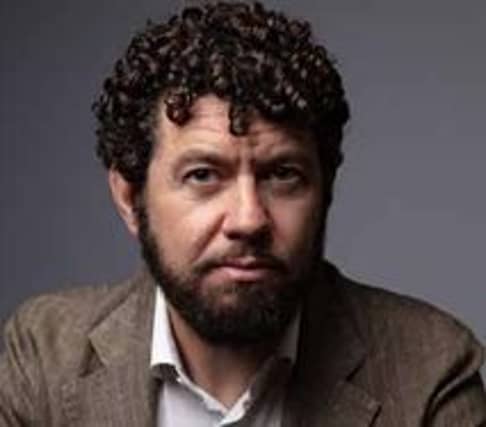

Acclaimed Irish singer-songwriter Declan O’Rourke has announced the release of his eighth studio album, Oceanic, which will hit the shops and streaming services on Friday, October 16, alongside a major run of live dates across Ireland this October and November.
There is no Galway venue as yet for the Kinvara-based singer/songwriter and acclaimed author – but there are dates confirmed for the Cork Opera House on October 8; Mullingar Arts Centre on October 9, Westport Town Hall Theatre on October 10, and Dublin’s Vicar Street on October 16.
Closest to Galway in November is a night at Glór in Ennis on November 13.
Recorded in Sydney, his new album marks a profound full-circle moment in O’Rourke’s life and career – a record shaped not only by place, but by time, memory and return.
At just 19, it was in Australia that O’Rourke committed his first songs to tape. That connect carried through with his much-acclaimed debut album, Since Kyabram (2004), taking its name from the south Australian town of Kyabram.
Decades later, returning to create a full studio album there represents more than a creative decision; it is a reconnection with the spirit of those formative years, now enriched by years of experience and artistic growth.
Declan’s enduring relationship with Australia also extends to his recent film debut, taking the lead role in a forthcoming Australian feature Almost With You, which includes nine of Declan’s original songs and is set for release later this year.
Oceanic was recorded with longtime friend and collaborator Jim Moginie of Midnight Oil at the helm as co-producer.
With twenty years between them, O’Rourke and Moginie share an easy trust that gave the sessions a real sense of freedom.
On the collaboration, Moginie says, “Such a wondrous singer and musician, Dec has made something truly magical and shape shifting here, and in returning to his second home on the other side of the world to make this feels like a real homecoming.”
A confident and carefully shaped record, Oceanic captures a life lived across two continents and hemispheres.
I’ve always felt that being an artist is a process of stripping away layers of yourself to get to the core.
“Oceanic somehow wrote, and then made itself too,” said Declan himself.
“I’ve always felt that being an artist is a process of stripping away layers of yourself to get to the core. If that’s true, then Oceanic is a collection of dreams that have surfaced on their own, from among the deepest of my own layers.”
Following Arrivals (2021), the landmark Paul Weller-produced album that marked a high point in O’Rourke’s catalogue, Oceanic feels like a natural step forward from an artist who continues to evolve, guided by curiosity and a willingness to follow wherever the current leads.
Declan released his debut album, Since Kyabram, in 2004, featuring the sublime Galileo, as well as We Didn’t Mean to Go to Sea and Love is the Way.
Subsequent albums include 2017’s Chronicles of the Great Irish Famine as well as 2007’s Big Bad Beautiful World and 2011’s Mag Pai Zai – and Arrivals marked a new high, an album packed with personal reflections and mesmeric music.
Born in Dublin, Declan O’Rourke has made his home in Kinvara for the last 20 years – completing a circle that has his grandfather, artist Michael Killeen, firmly at its core.
Michael was reared in the village but left in 1937 to study art in England when he was just 20 years old and never returned – after a discovery that shocked him to his core.
Michael had worked in churches around the area, touching up paintings, repairing plasterwork and painting a mural in Labane Church.
But when he asked his local priest for a reference before leaving, he was told that wouldn’t be possible, because the young man “was illegitimate”.
This was how he learned that he’d been born outside of marriage. Years later, when his children and grandchildren went searching for information, Michael’s birth cert showed he had been born in Gort Workhouse.
He married in England, to a young woman from Dublin and they settled in Ipswich where he got a job as a sign-writer.
However, when pregnant with their third child she became ill and they moved home to Dublin. She died three days after their son, Robert, was born.
Michael stayed in Dublin and got work in the same business. He married again to a widow who also had children and “they had four more”, the oldest of whom was Declan’s mother.
There were 14 in the house, says Declan, who adds that later in life, his grandparents built a shed at the back, which was where Michael painted.
Michael gave all his children paintings of Kinvara, some of which were painted from sketches he had made in the early 1930s – he lived beside Dunguaire Castle and views of the harbour feature strongly in works that capture the village’s social and cultural life at that time.
He died aged 64 in 1980 but the legend of Kinvara lived on and when Declan was in his early twenties, just back from Australia, he and a group of friends from abroad visited.
He recalls driving down country roads and coming over the hill into the village, by the castle. He knew it from the paintings and was overcome with emotion. “It was like coming home.”
It was a theme he dealt with on Arrivals – referencing Michael in his reflective Stars Over Kinvara – squaring a circle so close to home.