

The sounds and music of our Celtic ancestors

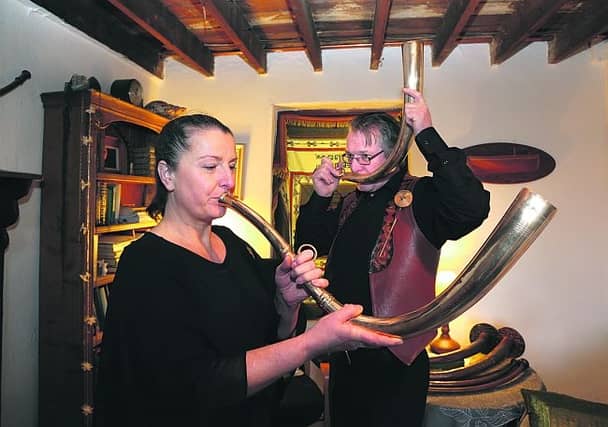

Lifestyle - Judy Murphy meets a couple who have a passion for ancient music instruments
If you happen to have some weird looking old bronze pipes lying about a barn or an attic and you have no idea what they are, don’t even think about throwing them away or offloading them at a car boot sale.
They could be musical instruments from 2,000 years before the birth of Christ and, if they are, Simon O’Dwyer of Ancient Music Ireland is the man to authenticate them.
Simon and his wife Maria Cullen O’Dwyer, who live in Cornamona, are the country’s leading experts on ancient Irish wind instruments.
Indeed, when one was being sold in a car-boot sale in England some years ago, Simon was involved in identifying it and getting it to the National Museum.
Ireland has the largest single collection of ancient metal wind instruments in the world, according to Simon. There are 104 of them, cast in bronze, dating from at least 3,000 years from 2000 BC to 1000 AD. They represent several distinct cultural ages and some are complete while others are not.
Studying, recreating, playing and lecturing about these ancient instruments is a peculiar path to take in life, and Maria laughs as she says you’d want to be a bit mad to do it. But it’s also fascinating and compelling.
Their work allows people a glimpse into the world of ancient civilisations in Ireland and further afield.
“I have a huge collection representing over 3,000 years of different civilisations,” says Simon, as he explains their work is “just opening the door.”
The work of Ancient Music Ireland started by accident for Simon, who was reared in Dublin. The graduate from an agricultural college in Tipperary worked for several years as a fisherman in Waterford before deciding to learn traditional Irish music. He’d previously played in rock and country bands but Irish music became his passion.
In 1986 Simon got an opportunity to look at Bronze Age wind instruments in the National Museum of Ireland, thanks to the organisation’s Keeper of Antiquities, Dr Eamonn Kelly. Until then, these had not been on display, although an archaeologist named John Coles had previously studied them.
“In 1964 he had listed all 104 horns that had survived [in Ireland] and even sounded some of the ones that were complete,” says Simon. “Then, in 1974, Peter Holmes got a doctorate in Metallurgy in London in how these were cast. And he had a go at playing them.”
For more, read this week's Galway City Tribune.