

It is beyond time to plan beyond the football on a Friday night


Galway United Cup hero Johnny Glynn plots a blueprint for future football success
Walking away from the recent Coaching Forum in Abbottstown, one unmistakable theme echoed through every conversation I had with fellow Galway coaches – frustration, writes Johnny Glynn.
It is not frustration with the raw footballing talent in the West of Ireland; we have never lacked for technical, resilient young players capable of competing at the highest domestic level and beyond.
Rather, it is a deep, mounting disillusionment with the chronic lack of progress in football infrastructure and long-term club development across our county.
Having spent seven years as Academy Manager at Galway United, alongside spells as Assistant Manager and coaching our U15 and U19 squads, I have witnessed firsthand how dramatically the club’s operational footprint has expanded.
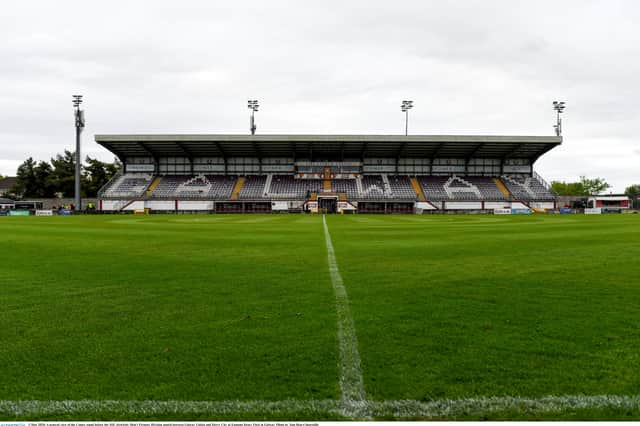
For the vast majority of its history—since forming as Galway Rovers in 1976 and adopting the Galway United name in the early 1980s—this was essentially a single-squad football club. Your entire focus revolved around preparing one senior men’s team for Friday nights at Terryland Park.
Today, Galway United fields two senior teams and six national academy squads. On paper, that looks like modern progress. On the ground, however, it is a logistical patchwork held together by goodwill, piecemeal arrangements, and rented pitches.
Look beneath the surface of an eight-squad club structure, and the fragility becomes immediately obvious.
For the past eight years—ever since transitioning to a full-time professional model—the senior men’s team has rented its training facilities at Salthill Devon.
Meanwhile, our Senior Women’s side and all six Academy squads are scattered across different rented venues throughout the county.
When you scatter eight squads across multiple sites, you do not have a football club; you have a collection of teams sharing a crest.
In elite player development, culture is built through proximity. When young academy players share a canteen, a gym, or adjacent training pitches with senior professionals, standards are absorbed by osmosis.
A 15-year-old sees how a full-time professional prepares, recovers, and carries themselves. Academy coaches interact daily with first-team staff, creating a unified tactical language and a genuine, club-wide 'feel'.
In Galway, that ecosystem simply does not exist. Squads rarely cross paths. Coaches operate in isolation rather than within a shared high-performance environment.
Worse still, when infrastructure and long-term developmental pillars are not institutionalized in bricks and mortar, standards become dangerously vulnerable to short-term budget cuts.
Earlier this year, the club inexplicably cancelled Strength & Conditioning across all academy squads—stripping away one of the most fundamental components of modern youth athletic development and injury prevention. You cannot claim to be building a modern academy pathway while removing physical conditioning from teenage athletes.
At present, Galway United relies heavily on the financial backing of the Comer brothers. They are shrewd, remarkably successful businessmen, and there is no question that their investment has kept the club competitive and afloat.
With the resources at their disposal, Galway United and the Comers should have the ambition to be Ireland’s number one club.
Given the scale of their backing and the untapped potential of the West of Ireland, that is an entirely realistic aim. Yet ambition without architecture is just wishful thinking: without a clear plan and a long-term vision, that future simply will not exist.
If a club’s entire training existence depends on annual rental agreements and day-to-day operational spending, it has built a house without a foundation. Should the winds ever shift, nothing permanent remains in the ground for the next generation of Galway footballers.
We do not need to look to the Premier League to see what centralized infrastructure achieves; we only need to look at how smaller European nations and progressive League of Ireland clubs operate.
This past summer, I travelled to Slovenia specifically to research how clubs operate in a small European nation—with a population less than half the size of Ireland’s—that consistently punches far above its weight on the international and European stage.
The lesson was immediate and sobering.
Slovenian clubs rarely operate with massive commercial budgets, yet their model is anchored in centralized, purpose-built club homes.
First teams, academy squads, sports science departments, and coaching staff all work under one roof on dedicated grass and artificial surfaces.
Because everything is integrated on a single site, contact hours are maximized, coaching methodologies align naturally from U14 right up to the
senior side, and clubs routinely develop and sell players into Europe’s top leagues.
Without a centralized base in Galway, we are asking local coaches and young players to compete in a 21st-century development race using crazy logistics.
Crucially, this is not solely a Galway United issue—it is a systemic Galway football crisis.
Across the city under the umbrella of the Galway Football Association (GFA)—who act as Galway United’s landlords at Eamonn Deacy Park—grassroots football is suffocating
under the exact same infrastructural deficit.
The GFA is desperately short of dedicated training facilities, leaving them reliant on the generosity of local junior clubs to rent pitches for county boys’ and girls’ emerging talent squads.
If Galway United and the Galway FA put old divisions aside and came together to jointly apply for state and Large-Scale Sport Infrastructure funding for a shared Galway High-Performance Centre of Excellence, the case for major government investment would be almost impossible to ignore.
Imagine the sheer scale of combined participation: thousands of grassroots boys and girls, county representative squads, six League of Ireland academy teams, and two senior national league sides all utilising a purpose-built, multi-pitch hub in the West of Ireland.
Instead, historical grievances keep two bodies that desperately need the exact same thing operating in separate lanes—duplicating costs, fragmenting the player pathway, and leaving young players in Galway paying the price.
The infrastructure progress that has been made by grassroots clubs throughout the county and this probably shows the progress that can be made if Galway United and the Galway FA get their act together.
We can continue celebrating short-term results and relying on rented hours across the county.
Or we can finally recognise that until infrastructure becomes our number one priority—and until Galway football unites to build a permanent home—we will keep running faster just to stand still.
Johnny Glynn is the former Galway United Academy Manager, Assistant Manager & U15/U19 Coach. He famously scored the winning goal when Galway United won their only FAI Cup in 1991.