

West needs investment to realise tourism potential

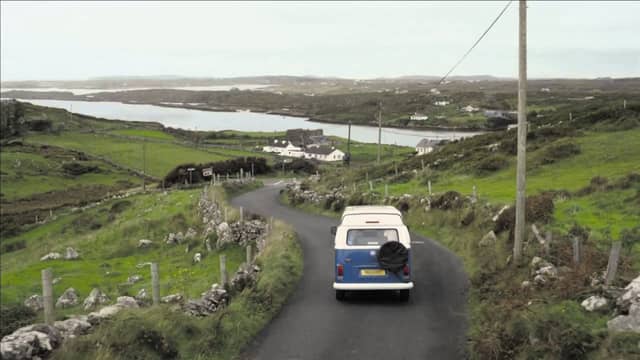

A new report by the Irish Tourist Industry Confederation has urged the Government to direct over half of their tourist investment to the west, with at least €125m needed over the next four years to transform it into “the quintessential Ireland destination”.
The influential representative body of the tourist industry believes that as well as redressing the west’s infrastructural deficits in communications, transport and utilities - created through chronic underinvestment - the State must deliver at least one flagship additional attraction by 2020.
The major report, titled ‘Tourism In The West – An Engine For Growth And Jobs’, has described the potential to grow tourism in the west as significant now that demand for holidays in Ireland has returned to growth - but only if the right policies and actions are pursued.
“Not only have visitor numbers and expenditure to the west been growing in recent years, but the area has been regaining share of the demand for holidays in Ireland. The diverse landscape, heritage, cultural and outdoor experiences, coupled with its people and tradition of hospitality, uniquely positions the west as the quintessential Ireland destination.”
A focused strategy to bring more visitors to the western seaboard, encouraging them to spend more and stay longer, could see the region capture at least 55% of the total tourist spend by 2020. This can be achieved through three pillars for growth: investment, branding and leadership, insists the industry body.
The ITIC wants investment on authentic ‘real Ireland’ experiences: heritage and culture; outdoor activities and exploration; maritime tourism; food and drink; The Gaeltacht; and festivals and events.
They also call for a particular focus on the development of extended walking and cycling ways, including the creation of a long distance Pilgrim Way.
A previous report in 2011 by the confederation included a recommendation to create an ‘Atlantic Coast Drive’, which Fáilte Ireland and the local authorities developed into the Wild Atlantic Way.
Now that the Wild Atlantic Way has been such a success, the focus should turn to the branding of a wider area around the route as Ireland’s top compelling ‘must visit’ year round destination.
One of the key challenges to increasing overseas visitor numbers is to improve air access as tourists who arrive at airports outside the capital spend more bed nights across the region.
The report found that the share of capacity into the West has been slipping as airlines increasingly concentrate services on Dublin. There have also been several instances in recent years of new routes into the west leading to a discontinuation of other existing routes.
“As the evidence points to the greater value of tourists arriving directly into the west, the development of sustainable summer routes from the principal source markets in mainland Europe - Germany, France, Italy, Spain and Scandinavia - and securing an increase in transatlantic services into Shannon present a particular challenge for the tourism sector in the west.”
An industry-led alliance to improve collaboration and the coordination of tourism development along the Western Seaboard was crucial to capturing a growing market share, according to the report.
Up to three geographically based forums are proposed, with an annual meeting to allow for engagement by the private and public sectors in planning and monitoring tourism development and marketing growth strategies.
They also propose a three to five year strategic investment programme with the Government and the alignment of plans by local authorities and state bodies, based on multi-annual budget commitments.
Greater engagement with the Office of Public Works (OPW), National Parks & Wildlife Service (NPWS), Coillte and the Western Development Commission is also essential to developing tourism.
ITIC chief executive Eoghan O’Mara Walsh pointed out that Ireland is currently benefiting from unusual circumstances created by a weak euro against the dollar and sterling, as well as a significant drop in oil prices. These benign trading circumstances cannot be relied on to continue indefinitely.
“Tourism, along with the agri-food sector, is the largest industry in the western seaboard and cannot be taken for granted and the future is positive but only if the government and agencies work closely with the tourism industry and national policy aspirations are underpinned by adequate investment in product and overseas marketing,” he stated.
ITIC chairman Paul Gallagher said while the volume of business and market share has increased , much work is needed to help tourism realise its full potential for the west of Ireland by redressing the competitive disadvantages in terms of transport, communication and utilities.