

West coast faces floodwater crisis by end of the century

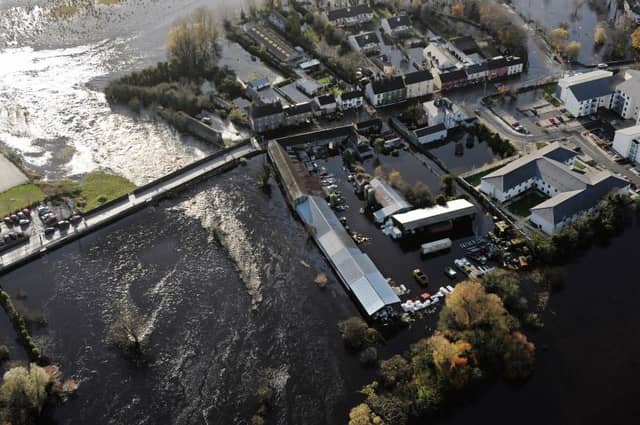

Sea levels along the west coast of Ireland are on course to rise by as much as one metre within the next century, according to doomsday scenario outlined in new scientific research.
It means that ‘exceptional’ flood events that now occur once every 100 years, could happen every year in coastal areas of Northern Europe, such as Galway, if greenhouse gas emissions keep rising.
The frightening projections by scientists take into account global warming and changes in mean sea levels, waves, tides and storm surges up to the year 2100.
The study, ‘Extreme sea levels on the rise along Europe’s coasts’ was published in Earth’s Future, an academic journal.
It contains worrying projections for areas of County Galway, such as Connemara, Ballinasloe, and Gort, as well as the city, which have all been submerged in floodwaters and battered by winter storms in recent years.
It warned that, “the North Sea region is projected to face the highest increase” in extreme sea levels with “similar” increases expected along the Atlantic coasts of Ireland and United Kingdom.
It said “considerable increases” are projected for the Norwegian, the Baltic, and the Mediterranean Sea.
“Future extreme sea levels and flood risk along European coasts will be strongly impacted by global warming. Here, we show changes in all acting components, including sea level rise, tides, waves, and storm surges, until 2100 in view of climate change.
“We find that by the end of this century the 100-year event along Europe will on average increase between 57 and 81 centimetres. The North Sea region is projected to face the highest increase, amounting to nearly one metre under a high emission scenario by 2100, followed by the Baltic Sea and Atlantic coasts of the UK and Ireland.
“Sea level rise is the main driver of the changes, but intensified climate extremes along most of northern Europe can have significant local effects. By the end of this century, five million Europeans currently under threat of a 100-year coastal flood event could be annually at risk from coastal flooding under high-end warming,” the reports’ authors said.
The study found that exceptional flooding events that used to happen on average once every century, will now happen far more frequently.
The report warned that the projected rise in extreme sea levels “constitutes a serious threat to European coastal societies.”
“Their safety and resilience depends on the effectiveness of natural and man-made coastal flood protection (including) the capacity of the coastal zone to act as a buffer and absorb ocean energy through complex wave shoaling and breaking processes.
“Taking into account flood protection standards in place and uncertainty in their probability of failure, around five million people could potentially be affected,” it said.
The present findings imply that exceptional flood events will occur “approximately every eleven years by 2050, and every three and one years by 2100,” under the worst-case scenarios.
“Hence, the five million Europeans currently at risk to be flooded by sea water once every 100 years, may be flooded on an almost annual basis by the end of this century. Some regions are projected to experience an even higher increase in the frequency of occurrence of extreme events, most notably along the Mediterranean and the Black Sea, where the present day 100-year extreme sea level is projected to occur several times a year.
“Such increase in frequency of events that today are considered as exceptional will likely push existing coastal protection structures beyond their design limits, rendering a large part of Europe’s coastal zones exposed to intermittent flood hazard. These findings stress the need to timely develop and implement appropriate adaptation measures,” the report added.
In 2013, new flooding risk guidelines recommended that planners allow an extra half a metre in height on sites in coastal areas to protect against the effects of climate change. Galway County Council was told at the time that the new guidelines are based on a ‘precautionary principle’ that a major once in a lifetime, or “one in one hundred years” flooding event will occur.
Gort and South Galway was badly hit by flooding in January 2016, as well as in 2009, when Ballinasloe was also submerged in water, causing millions of Euros worth of damage.
The city and Connemara has also endured several flooding events in the past decade.