

Volunteer’s insight into reality of famine and war in South Sudan
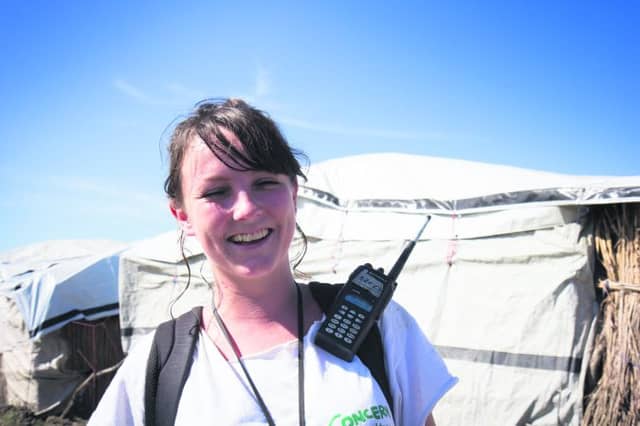

South Sudan's ongoing civil war has left 3.8 million people needing urgent assistance, with more than 1.5 million being displaced. Famine is a real and imminent threat, according to aid agencies in the region.
BY EMMA FLAHERTY
I was working at a plastic table in the temporary warehouse that we use as our office when a colleague rushed in with disturbing news: an aircraft that came in just after her flight landed had been shot down. An agitated discussion swept through the warehouse. Some said they saw smoke plumes rising south of the base.
As the field coordinator for Concern Worldwide in Bentiu, my first priority was to make sure that it was not an aircraft carrying my colleague, who had been earlier planning to head to Pariang [also in Unity State]. Thankfully, he was not on the flight. The crashed aircraft was a cargo helicopter and, tragically ,three of the four people on board were killed.
A month ago, my reaction would have been one of shock. But since then security has deteriorated so recently that my initial reaction is more subdued. Bad news has, in some ways, ceased to be shocking in one of the most contested areas of South Sudan’s civil war.
In August, government and rebel forces clashed just a few kilometres from our base. Then sustained shooting was aimed towards the base, wounding a child who was waiting for medical care, and hitting humanitarian housing and offices. Recently, a helicopter had been downed in what Toby Lanzer, the UN Assistant Secretary-General in South Sudan, called “a hostile act against the United Nations”.
But this is Bentiu. If we stopped every time something bad happened, we would get nothing done. Even just after the crash, we carried on with our work. After all, we are told once every two weeks or so that major fighting is imminent. Sometimes it happens, sometimes it doesn’t. That is the nature of this conflict. It is unpredictable.
As a humanitarian organisation delivering life-saving services in the camp – from clean water and sanitation to nutrition and shelter – we have to plan with this volatility in mind so we can continue to serve the 46,000 people who have found shelter here.
We are spending a lot of time in bunkers on the base, sheltering from the fighting. If people have time to grab their laptops, they pass the time working. Some play cards, but usually we talk and try to figure out where the shooting is coming from. We are released when UN security announces over the radio that it is safe to come outside again.
No two days are the same. Some days I might be wading around in the camp’s drainage channels on a shelter assessment or handing out tokens for a distribution. Other days I might be wading through budget realignments, wishing I was back in the drainage channel.
Until recently, we lived in something of a bubble. We are in a war zone, certainly, but as we are on a UN base, there was a sense of the war being “out there”. In fact, that is the point of this camp, or “protection of civilian” site, as we call them here—to give civilians protection from the conflict and access to life-saving services.
However, events in the past three weeks have changed everything. The shooting incident a few weeks ago has shaken us all. The bullet holes in the office and housing containers are a constant reminder that we have chosen to put ourselves in the middle of a brutal and unpredictable conflict, where respect for humanitarian principles and laws seems to be a lofty aspiration.
However, just a few hundred metres away from where we work and sleep is the reminder why we are and should be here.
There are more than 46,000 people who have fled desperate circumstances only to find themselves in a different kind of hell. Heavy rains have left the base flooded and people are living knee-deep in water – sometimes waist-deep.
It is a terrible and incomprehensible thing that people should be reduced to living like this in order to feel safe from violence and hunger. We have to be here to support them. There is no question of that.
As long as we can be here, we must be here.
> Emma Flaherty from Knocknacarra in Galway City is Area Co-ordinator with Concern in Unity State, South Sudan, based in the city of bentiu.