

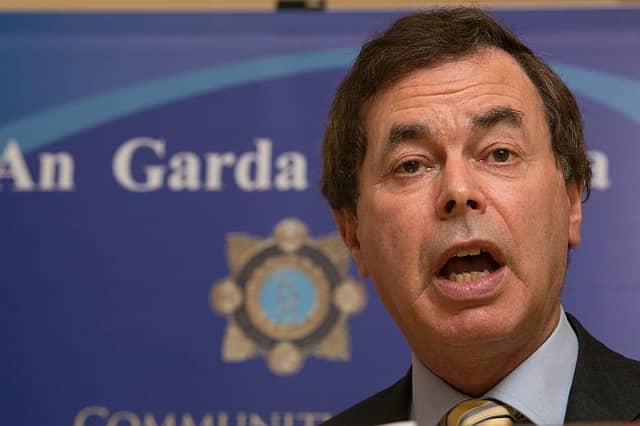
Sold a pup by Shatter’s dismissal of the anomalies in the GSOC bugging saga

World of Politics with Harry McGee – [email protected]
Unlike a loaf of bread from Griffin’s Bakery the weekly political column isn’t whisked out of the oven just before the Connacht goes to press every week. It's more in the Delia Smith style of ‘here’s one I prepared earlier’.
Sometimes you are caught out by timing. Colm Keaveney’s decision to join Fianna Fáil was a case in point, coming just a little too late after this column was written to be commented upon.
Journalists hate when their newsdesks sit on exclusive stories they have or when editors delay in order to give them a good display. There is always the chance that one of their rivals will nip in first or the story will get overtaken by events.
Of course, that is all becoming a bit moot with the demands of online consumers for everything to be immediate. Tomorrow morning is an eternity away.
The demands of the deadline have demanded in the past that journalists have been forced to report on events that had not yet occurred as if they had already taken place – in the past tense. The reason? The event had not taken place by the time their deadline came but the publication hit the streets after the event was over. Usually in those situations, journalists have written ‘at the time of going to press’ to show it hadn’t yet happened when they wrote it but giving as last-minute an update as they could muster.
In extremis, journalists have taken the chance and reported on an event as if it had already taken place. I remember a long time ago writing for the Galway City Tribune that a funeral had taken place on the Friday morning (the morning we went to press). Later the photographer Joe O’Shaughnessy came in and said “haven’t you heard, that funeral was called off”.
Cue, shock and panic on my part. Joe was merely slagging, but also making a point.
The best known example in recent years is Toby Harmden of the Telegraph’s report on Saddam Hussein’s ‘execution’. The piece was straight enough and gave a very straightforward account of a very conventional execution. Problem was that he had written it up beforehand and the execution was anything but straightforward and conventional, with the event being videod as the executioners hurled coarse insults at the former Iraqi dictator.
That’s all a lead-up to saying that last week’s column was the victim of slightly unfortunate timing. It was written on Tuesday evening after Minister for Justice Alan Shatter had spoken in the Dáil but before one of the three Garda Ombudsman commissioners, Kieran Fitzgerald, had responded on RTÉ’s Prime Time.
When I heard Shatter give his account to the Dáil, my only reaction was ‘puff of smoke’ and “that story is over”. He quickly trotted though his account of the three breaches and described them all as if they were the most innocuous things in the world, completely explained away by innocent explanations.
But Fitzgerald gave an account on Prime Time that night that was the polar opposite of what Shatter had said. To listen to both accounts was almost like listening to outlines of two different events.
Anyway, my whole column last week was based on a wholesale acceptance of what Shatter had said in the Dáil (naive on my part, mea culpa, mea culpa). As it happened I was on Vincent Browne’s programme on TV3 that night and had a chance to go through everything that Fitzgerald had said. With a sinking feeling I guessed that I had been sold a pup.
And so that’s why I am begging your indulgence to retread that ground this week and look at all that was not said by Shatter, the omissions that made a material difference.
For more, read this week’s Connacht Tribune.