

Soaring energy demand conflicts with our climate change targets

World of Politics with Harry McGee
I’ve noticed the massive black building taking shape off the M6 near Athenry in recent months. “Ah that must be the data centre,” I murmured to myself unthinkingly. Of course, it’s not. The data centre went kaput in 2018.
So a quick consultation with Mr Google reveals that it’s a new global manufacturing facility for Dexcom, and its continuous glucose monitoring products. The penny dropped. This is the same Dexcom that has naming rights for the Sportsground. It will also become a big employer in the area.
Anyway, mistaken though I was, I have been thinking of data centres and energy lately. The Apple proposal to build a €850 million facility at Derrydonnell Woods became a national issue after Galway County Council granted planning permission in 2016. The decision was appealed to An Bórd Pleanála which upheld the permission. Two local residents then took a judicial review case to the High Court, which also upheld the decision. It was then appealed to the Supreme Court which dismissed the appeal by the two objectors, and confirmed approval for the first phase of the project.
By that time it was moot. Apple decided in 2018 to abandon the project. Many believed it was because of the protracted legal wrangling and that the global tech company became impatient. Perhaps there were other reasons. In any instance, it was a goner.
Back then, many ordinary people (including myself) would not have been hyper aware of how important data centres had become. It’s there that all the memory that’s in the cloud, all the data, all the applications, all the processing exists for our digital world.
That’s all very well, you say, but what has it got to do with me? It’s what powers your Netflix, or what stores those thousands of iphone photos you have taken and have never curated, or using Spotify or TikTok, or sending on WhatsApp. So what used to be the hard disk on your computer is now somewhere remote like Athenry pumping information and data into your smartphone wirelessly.
That comes at a cost. And the cost is it eats up electricity with the alacrity of a PacMan on warp speed (1980s technology reference — I’m afraid if you are under 40 you will have to look that one up!). When Apple applied for planning permission in 2016, data centres used up about 5 per cent of the State’s energy. A report from the CSO during the week confirmed that in the intervening nine years there has been a four-fold increase. They now use about 20 percent of all our energy.
In February this year the Commission for Regulation of Utilities (CRU) issued a new policy in relation to grid connection for large energy users, data centres in other words. It ruled that in future data centres will need to supply electricity to homes and businesses. To do that, they will be required to have backup generators or storage (battery storage) that equals their level of demand. They must be used to supply electricity to the market.
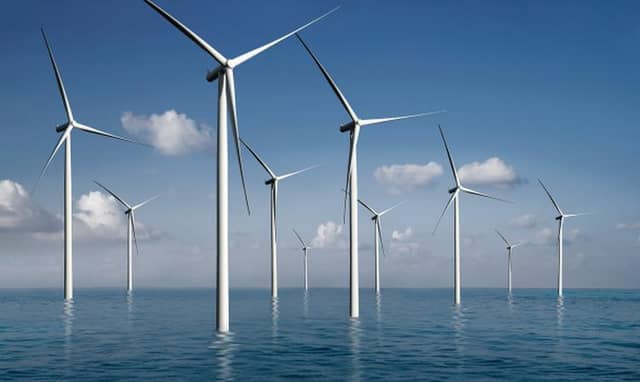
Pictured: Offshore wind farms will face court challenges.