

Passionate lobbyists make a strong case for GLUAS
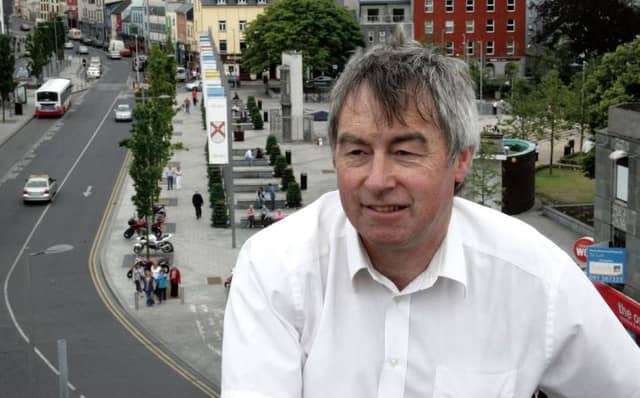

World of Politics with Harry McGee
One afternoon last week, a group of people gathered in the audio-visual room of Leinster House for a special presentation. It was hosted by Galway Independent TD Catherine Connolly, and a number of local TDs and Senators were there, including Seán Kyne, Anne Rabbitte, Albert Dolan and John Connolly.
Those participating in the event were familiar to me, though some I had not seen for many years, including the redoubtable Derrick Hambleton of An Taisce, Murt Coleman, Robert Canavan and Brendan Holland. They were there to talk about a subject that is a huge passion of theirs for many years. And that is a light railway for Galway, otherwise known as the GLUAS.
When I first heard of the idea of a GLUAS a few years ago, I believed light rail was only feasible for a city the size of Dublin, and possibly Cork.
Not for Galway. Too small. Streets are too narrow. Not enough bridges.
I’ve since been disabused of that misconception – totally.
When I left Galway 30 years ago, the population was a little more than half of what it is now. And that’s not taking into account the huge number of families who live in the satellite towns and hinterlands, and commute into town on a regular basis.
Secondly, the technology has improved no end since then. What didn’t seem possible then is more than possible now.
Murt Coleman did the presentation, and I was taken by his last slide, a picture of a carriage from the Galway and Salthill Tram company, which operated a service from town to Salthill (then almost in the countryside) from 1879 to 1919.
I lean heavily on accounts of local historian Tom Kenny for the details of the service. It cost £13,000 to set up and at its peak was carrying 100,000 passengers a year, no mean feat in those days.
There was a single tramline - narrow gauge - that connected the town with the seaside resort. There were extension loops of track along the way, to allow incoming and outgoing trams pass each other. The double-decker trams, which could take 36 passengers, were horse-drawn.
World War I finished off the company. Its horses were requisitioned by the British Army for service in Flanders. The war caused a slump in tourism and demand fell. Besides, the combustion engine was also beginning to provide stiff competition to traditional modes of transport.
Pictured: GLUAS Chairman Brendan Holland...making the case to Oireachtas members.